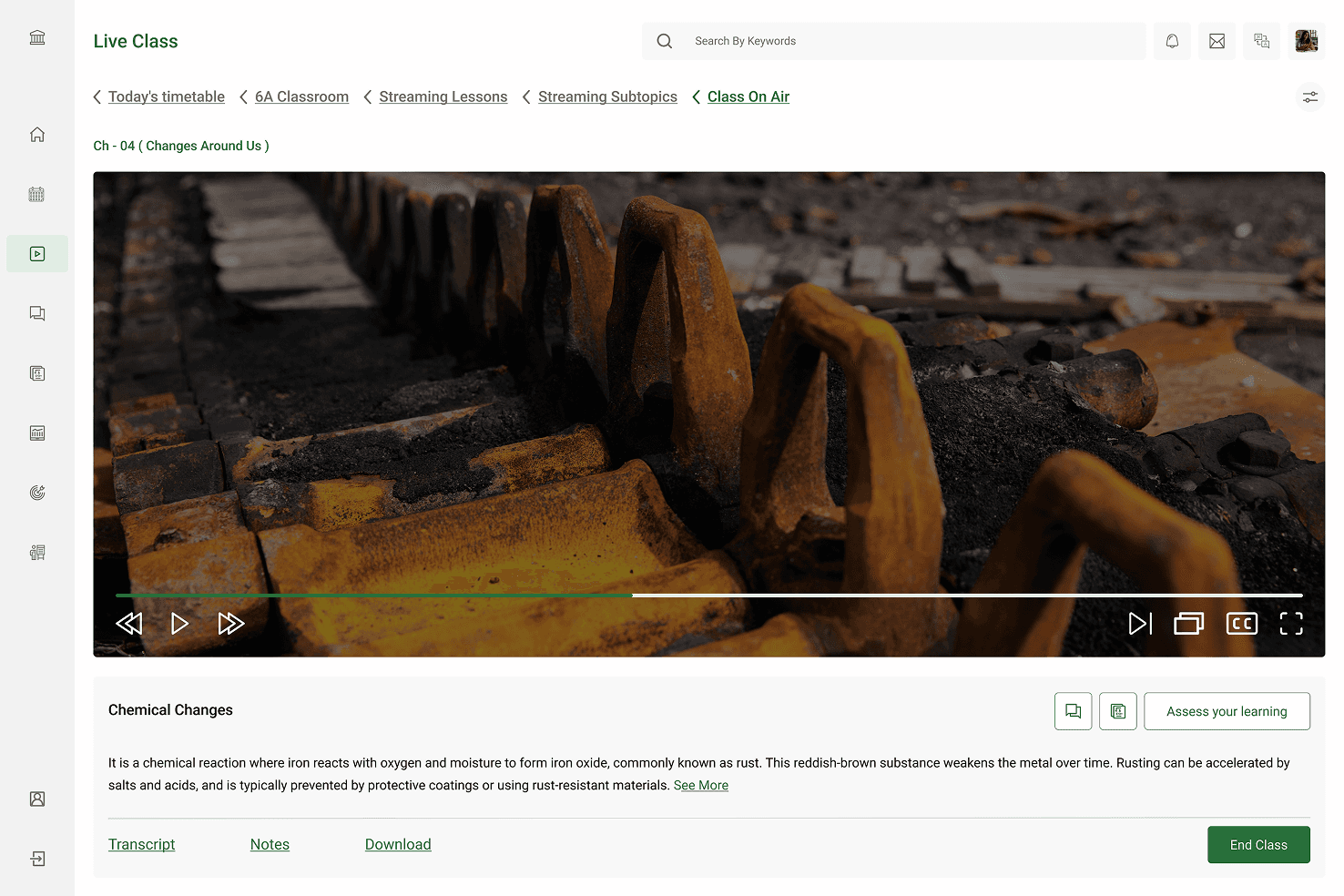
Ch - 04 ( Changes Around Us )

Chemical Changes
It is a chemical reaction where iron reacts with oxygen and moisture to form iron oxide, commonly known as rust. This reddish-brown substance weakens the metal over time. Rusting can be accelerated by salts and acids, and is typically prevented by protective coatings or using rust-resistant materials. See More
Transcript
Notes
Download
Assess your learning
End Class
Today's timetable
Browse Lessons
Streaming Lessons
Streaming Subtopics
Class On Air
Live Class
Search By Keywords
Dashboard
Select Assignment
Curriculum Info.
Class 6 - A ( Science )
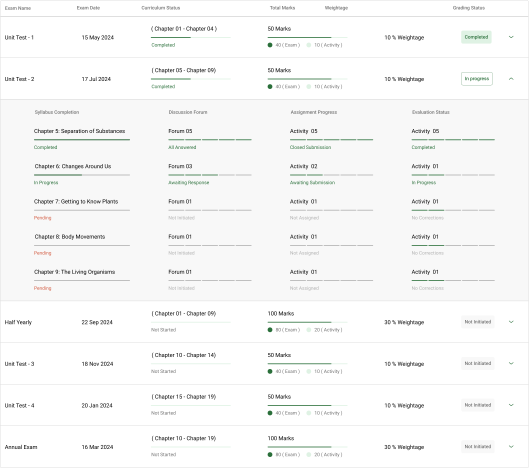
Unit Test - II
Chapter - 04
Chapter - 05
Chapter - 06
Chapter - 07
Chapter - 08
Unit Test - 2
Exam
Search By Keywords

Continue Watching
Introduction To Coding
Start Course
2hrs 30mins Left
Dashboard
Browse Courses
Beyond the Classroom
Points Spent
2665/5685 Points
Avg. Time Spent Per Day
1.5 hrs/day
Course Completion Status
7/12 Courses
Completed
7 Courses
Enrolled
12 Courses
Courses For Personality Development

Time Management and Organization
Enroll
5240 Points

Critical Thinking and Problem Solving
Enroll
4250 Points

Interpersonal Skills
Enroll
8750 Points
Leadership and Teamwork
Enroll
6570 Points

Conflict Resolution and Negotiation
Enroll
5680 Points
Courses For Social Good
Enroll
4780 Points

Enroll
1230 Points
Animal Care and Welfare
Digital Storytelling

Enroll
7890 Points
Culinary Skills

Enroll
7820 Points
Basic Carpentry and Woodworking

Enroll
4580 Points
Basic Car Maintenance and Road Safety
Know The World Around Us
Cybersecurity Awareness
Start Course
9850 Points

Digital Media Creation
Start Course
4790 Points
Robotics Basics
Start Course
6380 Points

Web Development for Beginners
Start Course
4580 Points

AR & VR Basics
Start Course
5260 Points
Discover Your Peers' Activities

Enroll
3650 Points

Enroll
2875 Points
Creative Writing & Storytelling
Science in Everyday Life
Enroll
4580 Points
Local History and Culture
Enroll
5000 Points
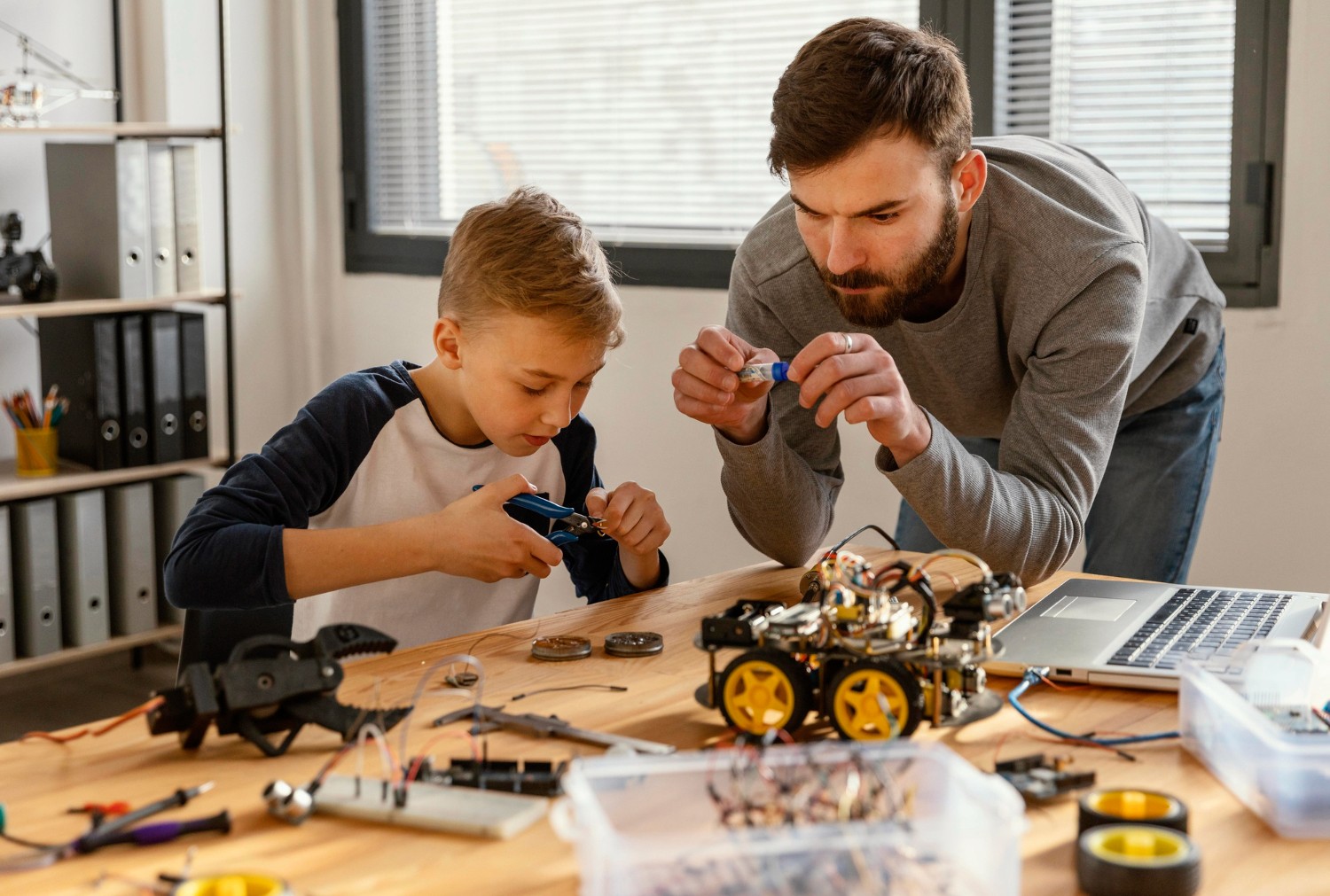
Robotics for Beginners
Enroll
8950 Points
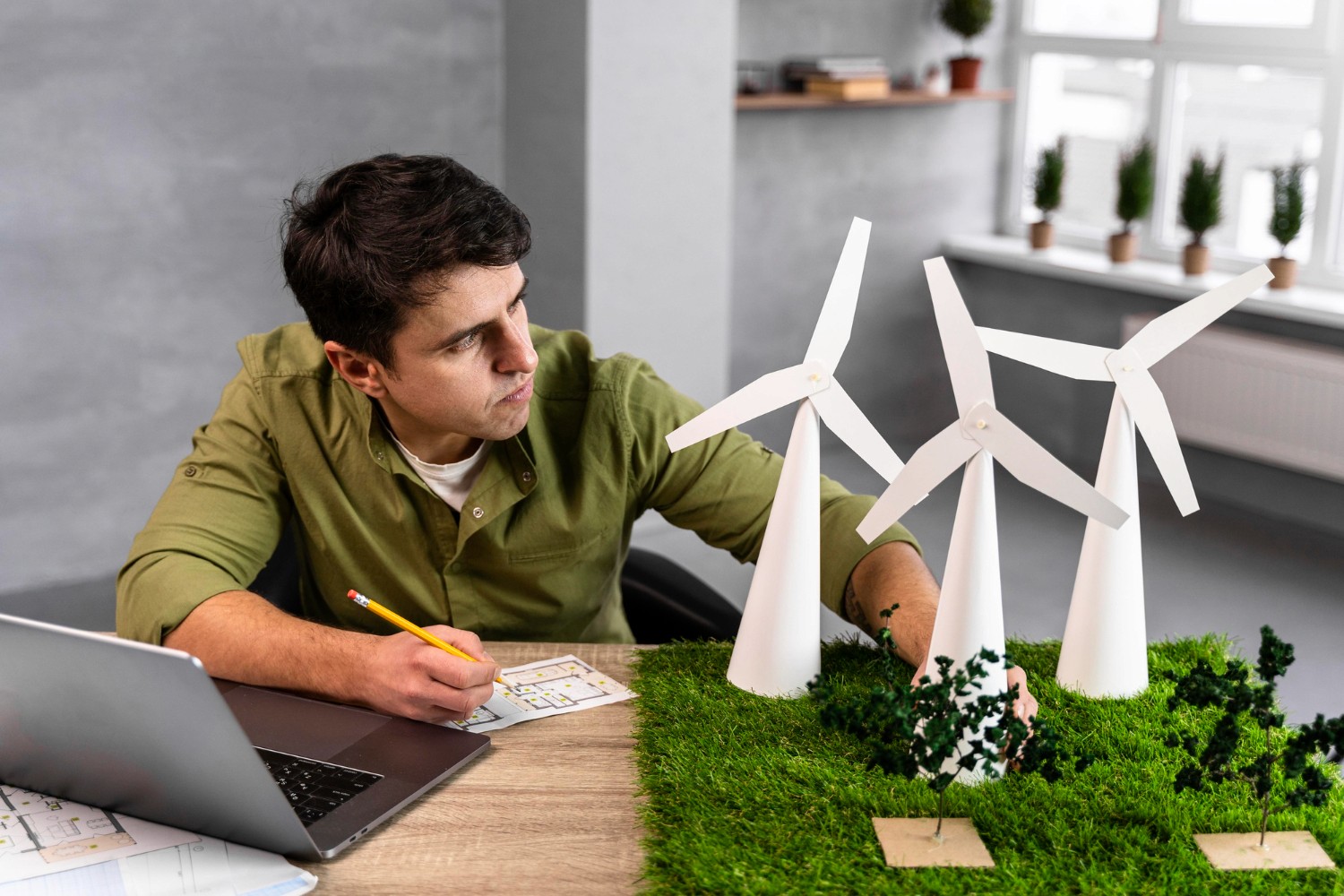
Introduction to Renewable Energy
Search By Course Name & Keywords
In-Class Courses

12 Classes

10 Classes
Environmental Awareness
Introduction to Entrepreneurship
14 Classes
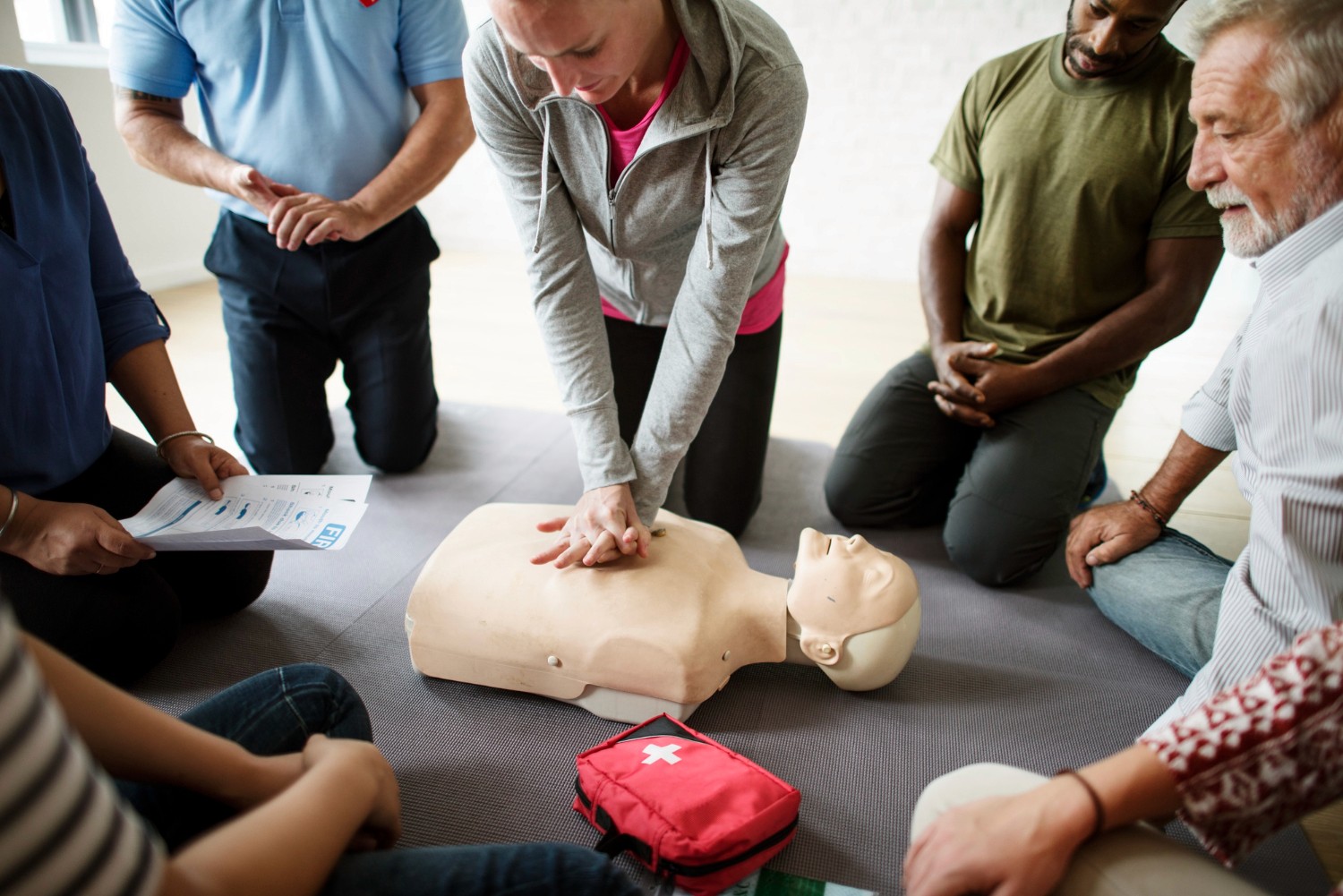
Basic First Aid and Safety

9 Classes
Digital Literacy

10 Classes
Communication Skills
Previously Enrolled

1hr 15mins Left

2hr 30mins Left
Introduction to Space Science
Introduction to Photography

30 mins Left
Logical Thinking and Puzzles

1hr 16mins Left
Art and Design Basics

1hr 13 mins Left
Ethical Leadership and Teamwork
Vocational Education
Search By Keywords
Student’s Profile
Search By Keywords
Arjun Kumar
Class 6 Student
Contact Info.
Location
Hosur, Ramnagar District, Karnataka State
Email ID
arjun.kumar.reddy@gmail.com
Languages
English , Kannada , Hindi
Phone Number
+91 99876 54321 , +91 91234 56789
I'm Arjun Kumar, a 12-year-old from Hosur! My favorite subject is science because I love discovering how things work. I enjoy playing cricket, riding my bike, and creating comic books. I dream of becoming a veterinarian to help animals. View More
Edit Profile
Share Details
Skills & Interests
Hobbies
Creative Writing
Public Speaking
Problem-Solving
Basic Coding
Time Management
Presentation & Commuication Skills
Financial Literacy
Drawing & Painting
Photography
Playing a Sitara
Reading Fictional Books
Playing Board Games
Gardening
Collecting Stamps
Environmental Awareness
Science Experiments
Astronomy
Robotics
History & Geography
Teaching Efforts
Weekly Time Table
Mon
Tue
Wed
Thu
Fri
Sat
1st Period
8:00am - 8:40am
2nd Period
8:40am - 9:20am
3rd Period
9:20am - 10:00am
4th Period
10:00am - 10:40am
5th Period
11:10am - 11:50am
6th Period
11:50am - 12:30am
7th Period
12:30pm - 1:10pm
8th Period
1:10pm - 1:50pm
Kannada
English
Kannada
Maths
Science
Science
Science
English
English
English
Drawing
Physical Ed.
Library
Drawing
Moral Ed.
Science
Maths
Science
Maths
Maths
Social Sc.
Social Sc.
Science
Social Sc.
Social Sc.
Social Sc.
Voc Ed.
Voc Ed.
Library
Voc Ed.
Moral Ed.
Moral Ed.
Voc Ed.
Drawing
English
Voc Ed.
Physical Ed.
Drawing
Physical Ed.
Maths
Kannada
Kannada
Kannada
Social Sc.
Kannada
Maths
Physical Ed.
Library
B
R
E
A
K
No. Of Study Periods
29 Periods / Week
No. Of Extra-Curricular Periods
19 Periods / Week
No. Of Teaching Hours
28 Hours / Week
Dashboard
Performance Overview
Class Status
Ongoing Lesson
Reversible & Irreversible Changes
Expansion & Contraction
Physical Changes
Chemical Changes
Separation Of Substances

Class 6 - A
Sub 05 - Science
Ch -04 Changes Around Us
Discussion Forum Status
Active Forum
Forum 02
Topics Of Discussion
Ch-03 / Physical Changes
Ch-03 / Chemical Changes
Ch-03 / Separation Of Substances
Start Date
15 August 2024
End Date
21 August 2024
+
Create New
Open Forum
Exam Details
Exam & Curriculum Status
Unit Test - 2
Unit Test - 2
Exam Name
17 Aug 2024
Exam Date
25 Marks
Total Marks
10 Percent
Total Weightage
Syllabus Completion

Completed
Plants Around Us

In Progress
Changes Around Us

Yet to Start
Lights & Reflections

Yet To Start
Fibres To Fabrics
Track Assignments
Ongoing Assignment
Assignment 02
Assignment Topics
Ch-03 / Reversible & Irreversible Changes
Make Corrections
Submission Date
26 August 2024
Grading Status
16/32 Students
Home
Search By Keywords

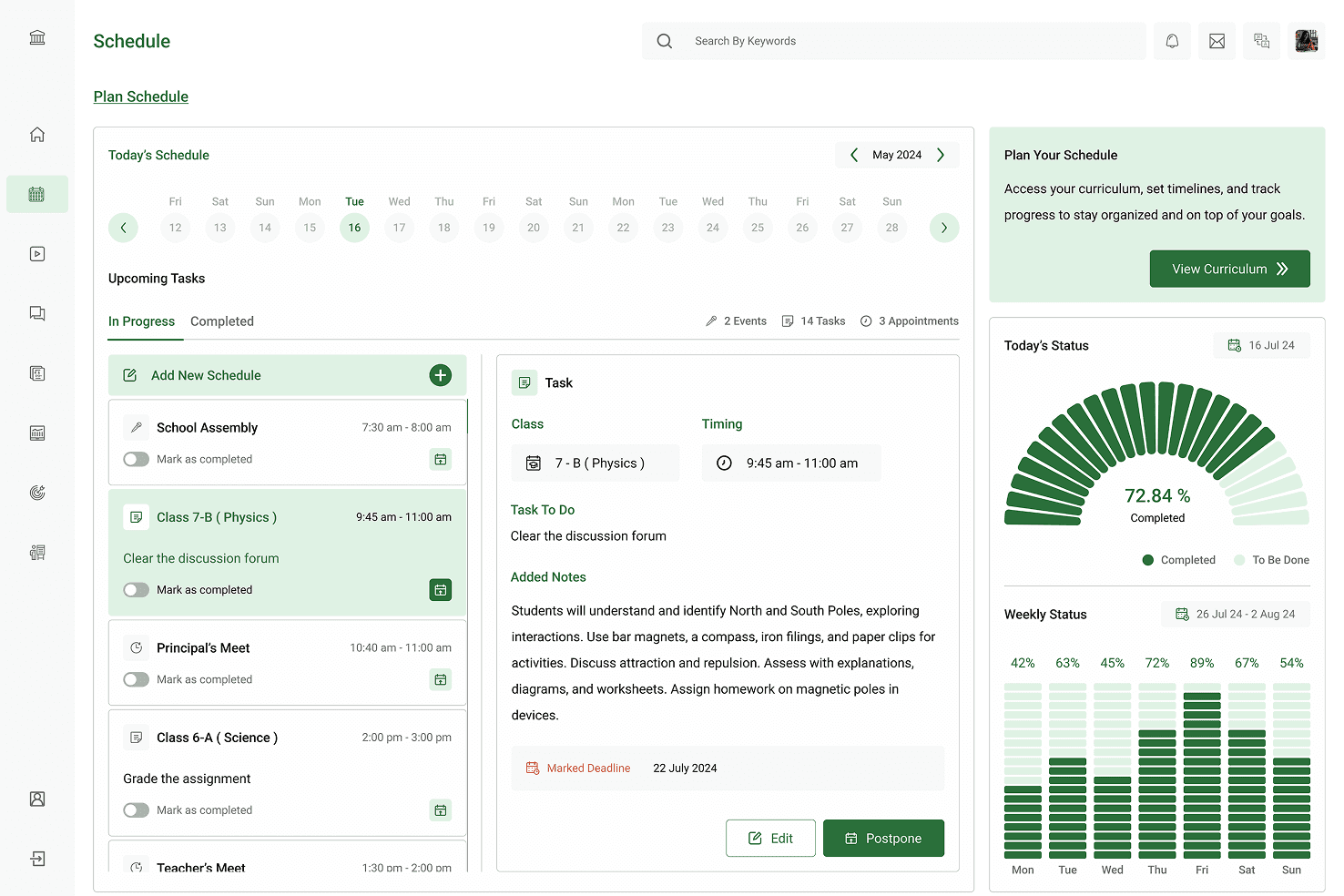
Plan Your Schedule
Access your curriculum, set timelines, and track progress to stay organized and on top of your goals.
View Curriculum
Today’s Status
72.84 %
Completed
Completed
To Be Done
Weekly Status
42%
Mon
63%
Tue
45%
Wed
72%
Thu
89%
Fri
67%
Sat
54%
Sun
26 Jul 24 - 2 Aug 24
16 Jul 24
Plan Schedule
Today’s Schedule
May 2024
Fri
12
Sat
13
Sun
14
Mon
15
Tue
16
Wed
17
Thu
18
Fri
19
Sat
20
Sun
21
Mon
22
Tue
23
Wed
24
Thu
25
Fri
26
Sat
27
Sun
28
Upcoming Tasks
In Progress
Completed
2 Events
14 Tasks
3 Appointments
Task
Class
8 - B ( Physics )
Timing
8:40 am - 8:45 am
Task To Do
Set a practice exercises
Added Notes
Students will understand and identify North and South Poles, exploring interactions. Use bar magnets, a compass, iron filings, and paper clips for activities. Discuss attraction and repulsion. Assess with explanations, diagrams, and worksheets. Assign homework on magnetic poles in devices.
Marked Deadline
22 July 2024
Edit
Postpone
Add New Schedule
+
School Assembly
7:30 am - 8:00 am
Mark as completed
Class 7-A ( Physics )
8:40 am - 8:45 am
Mark as completed
Set a Practice exercise
Class 7-B ( Physics )
9:45 am - 11:00 am
Mark as completed
Clear the discussion forum
Principal’s Meet
10:40 am - 11:00 am
Mark as completed
Class 6-A ( Science )
2:00 pm - 3:00 pm
Mark as completed
Grade the assignment
Teacher’s Meet
1:30 pm - 2:00 pm
Mark as completed
Class 6-B ( Science )
4:00 pm - 5:30 pm
Mark as completed
Grade the Unit Test - 2
Class 8-C ( Physics )
5:30 pm - 6:30 pm
Mark as completed
Set an assignment
Schedule
Search By Keywords
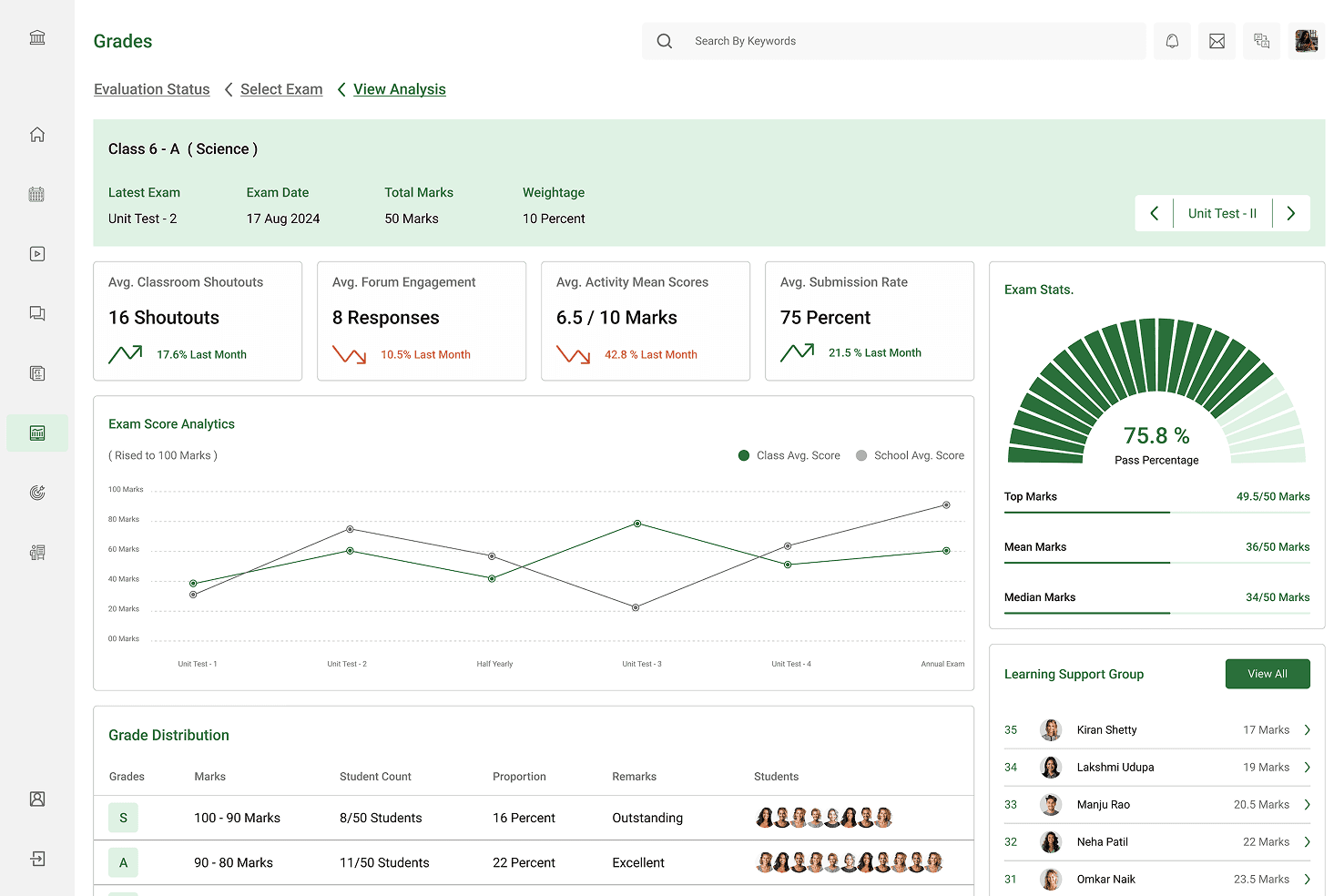
Grades
Search By Keywords
Evaluation Status
Select Exam
View Spreadsheet
Student Analysis
Marks Obtained
49.5/50 Marks
Overall Grade
Grade S
Current Standings
Top 10 Percentile

Arjun Kumar
Forum Engagment
16 Responses
21.8%
Higher than the Last Month
Student Participation
Avg. Class Participation
00
Apr
May
Jun
Jul
Sep
Oct
Nov
Dec
Jan
Feb
Mar
04
08
12
16
20
24
Last Year
Classroom Response
8 Shoutouts
16.5%
Lower than the Last Month
Student Response
Avg. Class Response
00
Apr
May
Jun
Jul
Sep
Oct
Nov
Dec
Jan
Feb
Mar
04
08
12
16
20
24
Last Year
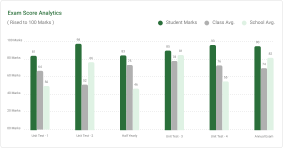
Proficiency Analysis
( Based on Practice Exercises )
Speaking Skills
16/24 Questions
66.6%
Listening Skills
26/30 Questions
86.6%
Writing Skills
14/32 Questions
43.7%
Case Study Skills
14/32 Questions
50%
Correct Answers
Incorrect Answers
Last Month
16 Quizzes
Challenges Won
24 Quizzes
Attempted
8 Quizzes
Challenges Lost
Assignment Stats.
Mean Assignment Score
Avg. Submission Rate
8.5/10 Marks
Since Last Month
Since Last Month
Ontime Submission
No Submission
Last Month
72 %
Ontime Submission
Dashboard
Browse Courses
Start Session
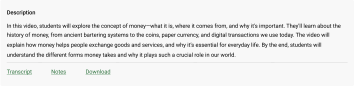
Financial Literacy For Kids
8 hrs 36mins
3 Modules
24 Lessons
Enrolled On 26 Jul 2024
Money Management
Saving strategies
Budgeting Basics
Personal finance basics
Emergency savings
End Session
Module 1 : Introduction to Money and Savings
1/6 Completed
What is Money?
7:06 mins
Importance of Saving
9:15 mins
Understanding different types of money
10 mins
How savings help in planning for future
15 mins
Start Practicing
0/15 Questions
Initiate hands-on assessment
What is Money?
Module 2: Budgeting Basics
1/7 Completed
Module 3: Smart Spending and Giving
1/6 Completed

Vocational Education
Search By Keywords
EMPOWERING EVERY
CHILD's POTENTIAL
EMPOWERING EVERY
CHILD's POTENTIAL
EMPOWERING EVERY
CHILD's POTENTIAL
Edu Grad
Edu Grad
# Inclusive learning
# Design For rural education
Designing the learning experience for underserved schools of India
Designing the learning experience for underserved schools of India
Designing the learning experience for underserved schools of India
My Intent Behind
Discovered that students often become passive recipients in classrooms, struggling to stay engaged and apply what they learn.
And most Edutech tools focus on digitizing textbooks rather than making learning interactive and meaningful.
Thought to envision solutions that makes learning more participatory, engaging, and effective for both students and teachers.
Project Type
Personal exploration project
Area Of Interest
Edutech Space
Skills
Background Study
User Interviews
Competitive Benchmarking
User Segmentation
Persona Creation
Journey Mapping
Affinity Mapping
Building Prototypes
Design Iterations
Timeline
Sep 2024 - Jan 2025
Setting context
India’s education system—particularly in rural areas—has been facing systemic challenges for decades. The sudden shift to online learning during the 2020 pandemic further exposed and worsened these issues. Now, even as we transition into a hybrid model post-pandemic, the foundational problems remain largely unaddressed. Teaching and learning continue to operate in survival mode, leaving little room for meaningful engagement or growth.
India’s education system—particularly in rural areas—has been facing systemic challenges for decades. The sudden shift to online learning during the 2020 pandemic further exposed and worsened these issues. Now, even as we transition into a hybrid model post-pandemic, the foundational problems remain largely unaddressed. Teaching and learning continue to operate in survival mode, leaving little room for meaningful engagement or growth.
The forgotten classroom
The forgotten classroom

Lack of access to education
Lack of access to education
3.2 Crores
3.2 Crores
Children in India do not attend school.
Children in India do not attend school.

Poor learning outcomes
Poor learning outcomes
74 Percent
74 Percent
Of Grade 5 students cannot solve a simple division problem.
Of Grade 5 students cannot solve a simple division problem.
Unsafe school habitat
Unsafe school habitat
1 in 2
1 in 2
Children experience violence from teachers.
Children experience violence from teachers.
High dropout rates
High dropout rates
50 Percent
50 Percent
Of students drop out before Grade 10.
Of students drop out before Grade 10.
Lack of 21st century skills
Lack of 21st century skills
< 45 Percent
< 45 Percent
Of graduates are unemployable.
Of graduates are unemployable.

Mental health crisis
Mental health crisis
50 Percent
50 Percent
of school-going children are affected by anxiety due to academic pressure.
of school-going children are affected by anxiety due to academic pressure.
Source : National Educational Policy Report 2024
Source : National Educational Policy Report 2024
Problem Orientation
Problem Orientation
This raised a deeper inquiry into why such limited progress has been made over an extended period, & why education—especially in rural India—continues to struggle to move beyond mere attendance. This led to the discovery of several underlying factors contributing to the problem.
This raised a deeper inquiry into why such limited progress has been made over an extended period, & why education—especially in rural India—continues to struggle to move beyond mere attendance. This led to the discovery of several underlying factors contributing to the problem.
Major Challenges
Major Challenges
1. Overburdened Teachers
Teachers are overwhelmed with multitasking in under-resourced, multi-grade classrooms, leading to burnout and diluted instruction.
Teachers are overwhelmed with multitasking in under-resourced, multi-grade classrooms, leading to burnout and diluted instruction.
2. Missed Foundations
2. Missed Foundations
Students fall behind academically early on due to unaddressed foundational learning gaps, making it difficult to catch up later.
Students fall behind academically early on due to unaddressed foundational learning gaps, making it difficult to catch up later.
3. Sacrificing for Survival
3. Sacrificing for Survival
Socioeconomic and gender-based pressures force students to prioritize short-term family needs over long-term education.
Socioeconomic and gender-based pressures force students to prioritize short-term family needs over long-term education.
4. Digitally disconnected
4. Digitally disconnected
The digital divide, compounded by limited tracking of student growth beyond academics, excludes holistic development in rural learning.
The digital divide, compounded by limited tracking of student growth beyond academics, excludes holistic development in rural learning.
5. Learning Without Relevance
5. Learning Without Relevance
Students disengage due to a curriculum that fails to connect learning to their daily lives or future opportunities.
Students disengage due to a curriculum that fails to connect learning to their daily lives or future opportunities.
6. No Space to Ask or Grow
6. No Space to Ask or Grow
Students lack safe and inclusive spaces to express doubts and develop confidence in their learning journey.
Students lack safe and inclusive spaces to express doubts and develop confidence in their learning journey.
Design response
Design response
The objective was to design an end-to-end teaching and learning experience for both teachers and students in a rural school setting, with a focus on streamlining the existing learning flow using the limited resources currently available.
The objective was to design an end-to-end teaching and learning experience for both teachers and students in a rural school setting, with a focus on streamlining the existing learning flow using the limited resources currently available.
Key Design Goals
Strengthen grade-level learning within existing pedagogy.
Strengthen grade-level learning within existing pedagogy.
To reduce the administrative burden on teachers.
To reduce the administrative burden on teachers.
To enhance student engagement and participation.
To enhance student engagement and participation.
To foster an interactive environment between teachers & students.
To foster an interactive environment between teachers & students.
Sneak Peek of the Solution
8:40 - 9:20 am
Environmental Science
Ch-03 Changes Around US
Start Class


Suman Patel
Class 6 student
Check Profile
Student Performance Analysis
Compare your progress, and turn setbacks into success.

Practice Exercises
Accept the challenges to sharpen your skills
Empowering Every Child's Potential
Empowering educators with data-driven insights to tailor instruction for each student, ensuring personalized and effective learning experiences.
Enter your School ID
Get Started

Edu Feed
Read More
Query
From queries to collective wisdom
Post Queries

Voc.Education
Introduction to financial literacy
Unpacking the design journey
Research Exploration
Initially, there was a lack of understanding regarding the current state of the education system and its pedagogical practices, particularly the day-to-day challenges faced by both teachers and students. To bridge this gap, three key questions were formulated:
Key Research Questions
What initiatives have been taken by the government to address these issues?
What are the current expectations and needs of teachers and students?
What existing solutions are available in the market?
Sneak peek of the solution
Sneak peek of the solution

Home — “Your Learning Lighthouse”
Home — “Your Learning Lighthouse”
Home — “Your Learning Lighthouse”
All journeys start here. A personalized dashboard that lights the path, shows daily highlights, and keeps students and teachers aligned in one glance.
All journeys start here. A personalized dashboard that lights the path, shows daily highlights, and keeps students and teachers aligned in one glance.

Schedule — “Plan it. Own it.”
Schedule — “Plan it. Own it.”
Never miss a beat. Organize classes, assignments, and revision goals with a smart planner that brings structure to every student’s day.
Never miss a beat. Organize classes, assignments, and revision goals with a smart planner that brings structure to every student’s day.

Live Class — “Learn Together, Live”
Live Class — “Learn Together, Live”
Live Class — “Learn Together, Live”
Step into the classroom, from anywhere. Real-time teaching with interactive tools that bring concepts to life and students closer to their teachers.
Step into the classroom, from anywhere. Real-time teaching with interactive tools that bring concepts to life and students closer to their teachers.

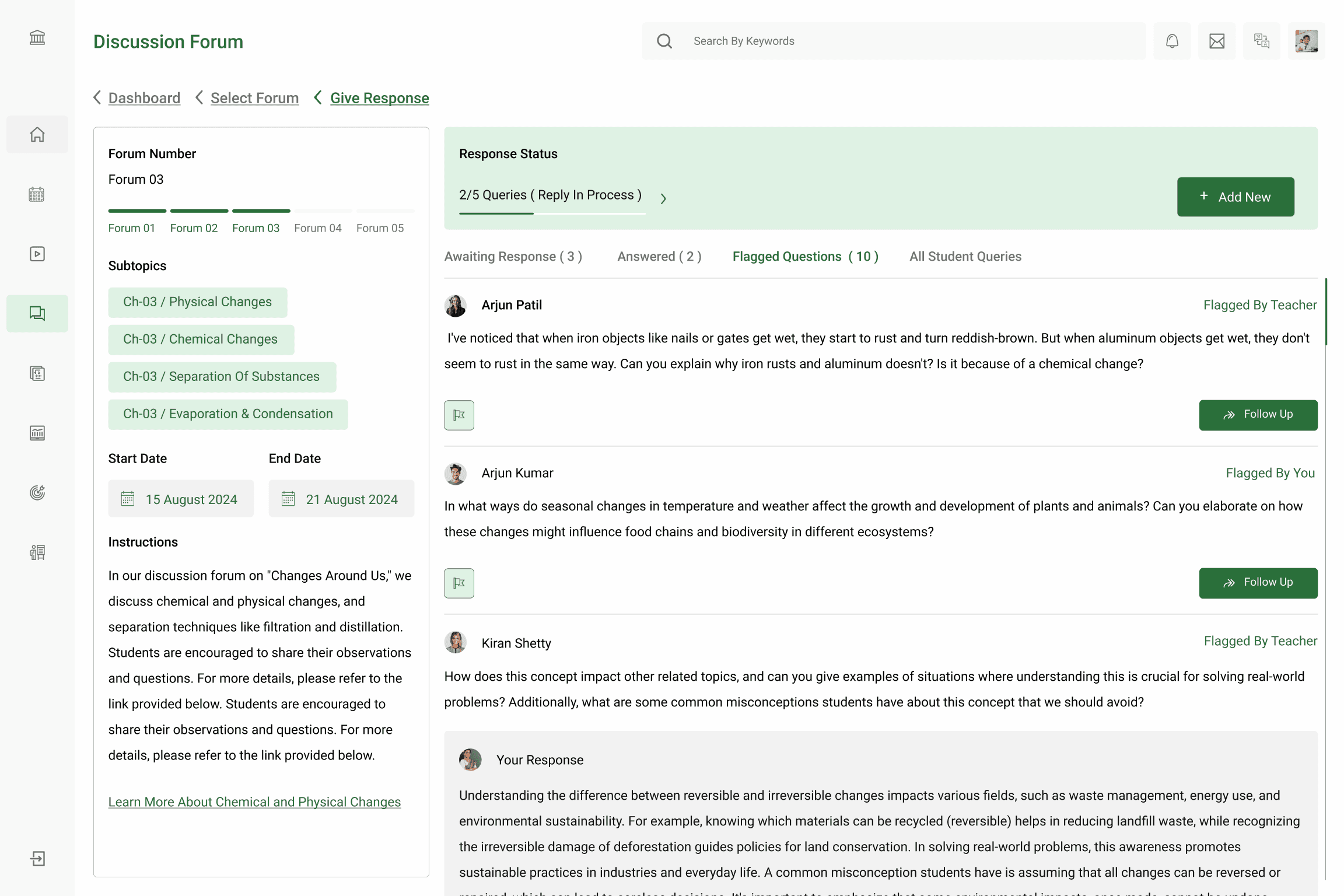
Discussion Forum — “Where Curiosity Connects”
Discussion Forum — “Where Curiosity Connects”
Discussion Forum — Where Curiosity Connects
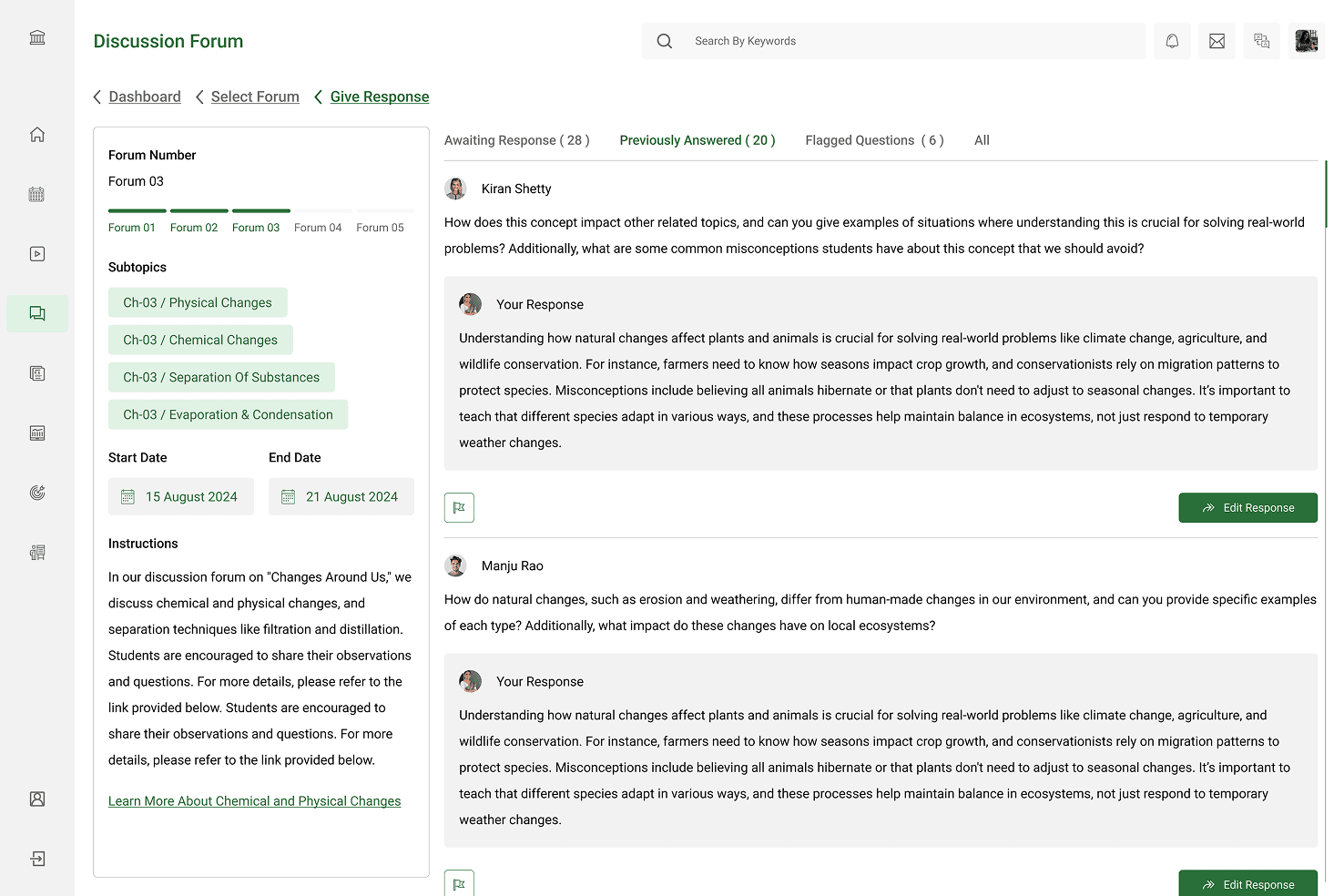
Ask. Answer. Explore. A safe, open space for students to clear doubts, share ideas, and learn through collaboration—even after class ends.
Ask. Answer. Explore. A safe, open space for students to clear doubts, share ideas, and learn through collaboration—even after class ends.

Assignment & Exams — “Test Your Best”
Assignment & Exams — “Test Your Best”
Assignment & Exams — “Test Your Best”
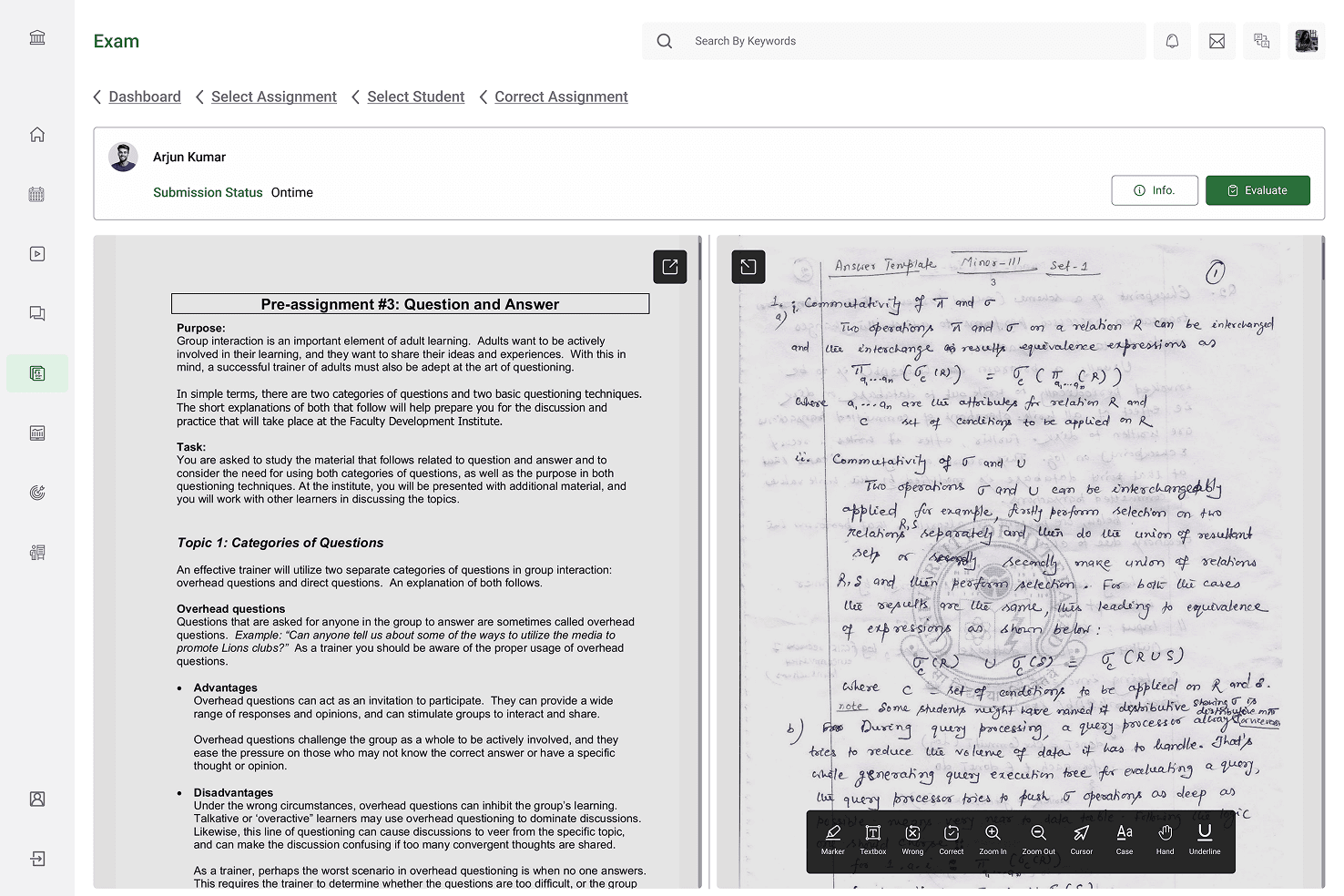
Apply knowledge through well-structured assignments and exams. Whether it’s take-home or time-bound, it’s all tracked and streamlined here.
Apply knowledge through well-structured assignments and exams. Whether it’s take-home or time-bound, it’s all tracked and streamlined here.

Grading & Status — “Progress at a Glance”
Grading & Status — “Progress at a Glance”
Grading & Status — “Progress at a Glance”
Stay on track with transparent grades, performance summaries, and personalized feedback. One look and you know exactly where you stand.
Stay on track with transparent grades, performance summaries, and personalized feedback. One look and you know exactly where you stand.

Practical Exercises — “Hands-On, Minds-On”
Practical Exercises — “Hands-On, Minds-On”
Practical Exercises — “Hands-On, Minds-On”
Bring theory to life with interactive activities and real-world problem-solving that reinforce classroom learning in a playful way.
Bring theory to life with interactive activities and real-world problem-solving that reinforce classroom learning in a playful way.

Vocational Education — “Skills for Life”
Vocational Education — “Skills for Life”
Vocational Education — “Skills for Life”
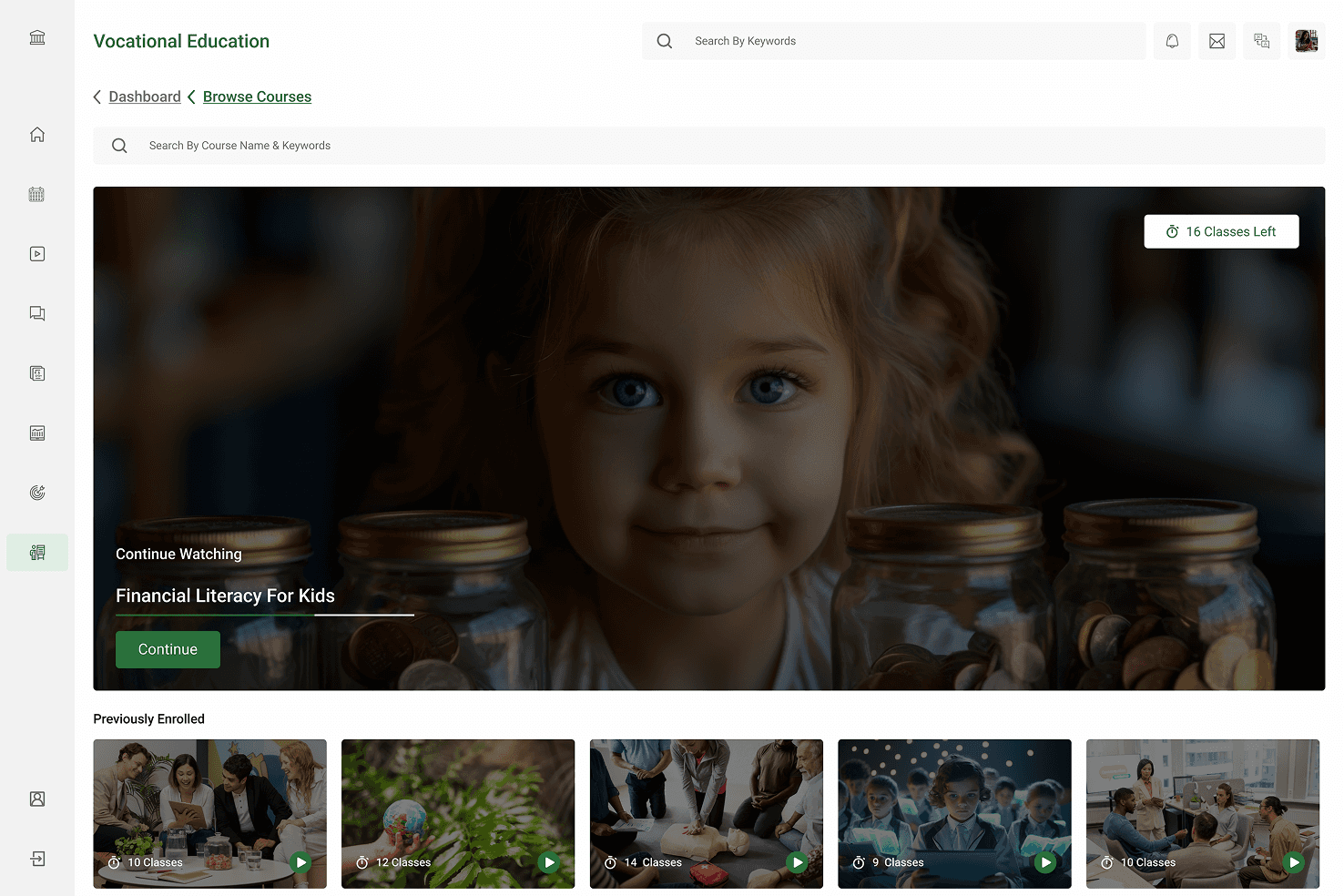
Learn beyond the textbooks. From crafts to coding, explore practical skills that spark careers, creativity, and confidence for the future.
Learn beyond the textbooks. From crafts to coding, explore practical skills that spark careers, creativity, and confidence for the future.
Sarva Shiksha Abhiyan
Aimed to bring all children back to school and increase enrollment across the country.
NEP 2020
Focused on improving education quality through flexibility, skills, local relevance, and holistic learning.
1980
2001
2011
2021
A Newfound Shift to Digital Learning
1 in 4
schools cross the country are equipped for digital teaching modalities today.
Societal Readiness
Nationwide digital adoption is real — 25M+ teachers trained and 5.8B+ learning sessions already happening.
Proven Impact Model
Low-cost digital programs like Sampark’s 7M-child reach and 32% learning boost show measurable ROI at scale.
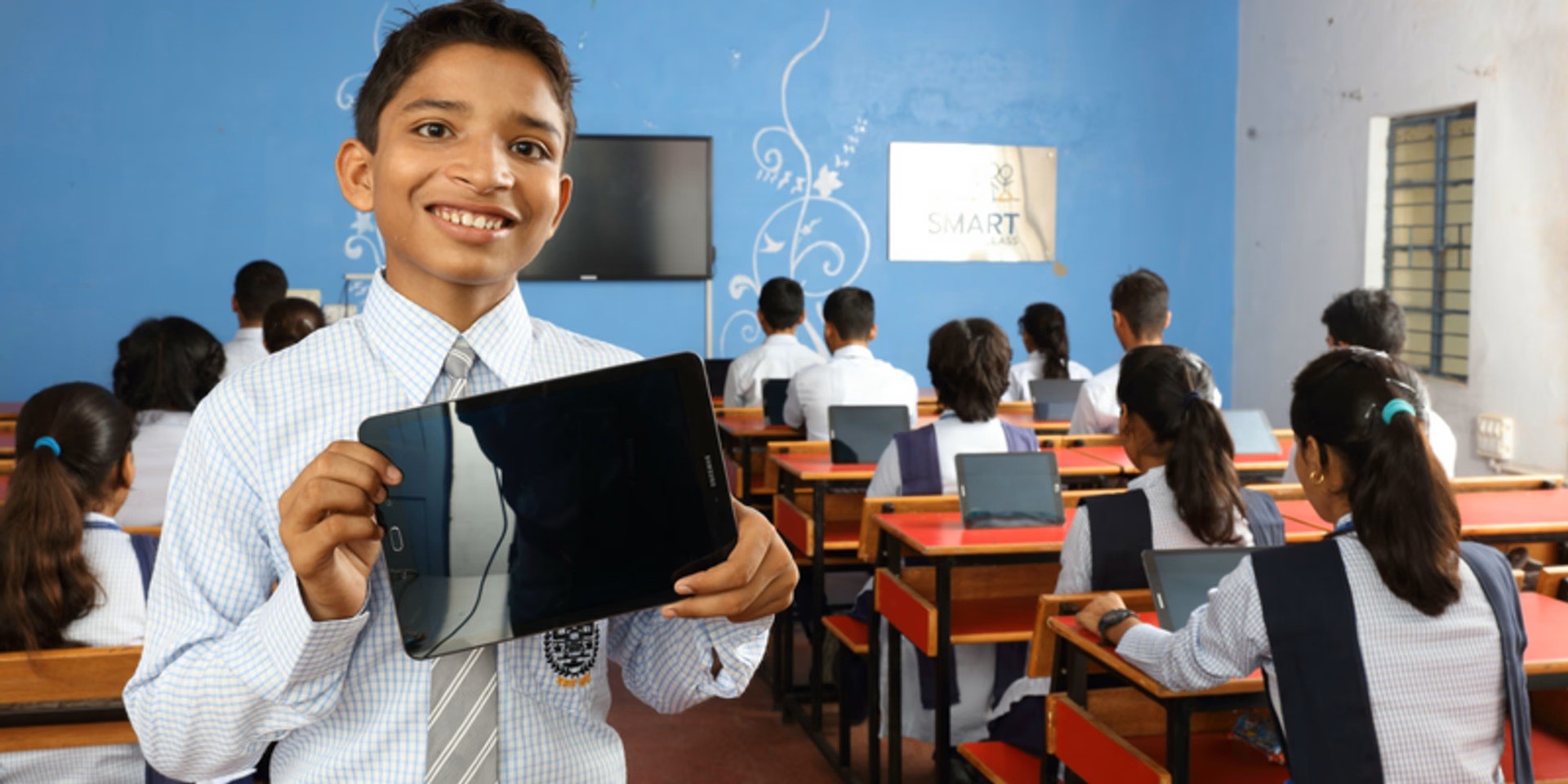
260 million students are aged 10–19, & around 150 million of them are using digital tools for learning.
+80 % in next 10 years
85 %
Projected share of students to access digital learning by 2030.
60 %
Rural adoption growth with cheaper devices & better internet
Rs 83,000
Crores estimated EdTech market size in India by 2028, driven by hybrid and device-based learning demand.
According to Annual Status of Education Report (ASER) 2024 – Pratham
User Interviews
To gain deeper qualitative insights, I conducted one-on-one interviews with teachers and students at the IIT Kanpur campus school over the course of a week. A total of 25 participants took part, maintaining a teacher-to-student ratio of 2:3.
Why These Interviews Mattered
Uncovered day-to-day challenges in teaching and learning.
Identified emotional friction points affecting engagement.
Observed real-world behaviors in classroom settings.
Testimonials

Nandini Chaurasia
Teacher
I have 4 grades in one room, 2 chalks in my box, and 0 free hours. When the inspector visits, I teach loudly. When a child is crying in the corner, I teach softly.
Insight 01
Single teachers often handle multiple subjects and large classes.

Aarav Mishra
Student
In our village, if there’s a wedding or even a buffalo race, school just stops. No one complains—it’s like we’re used to learning only when the village allows it.
Insight 01
School schedules are easily disrupted by on-campus events and activities.

Suman Patel
Student
When my teacher asks a question, I stay quiet. Not because I don’t know—but because I don't want to get it wrong in front of everyone. My voice doesn’t reach far in room.
Insight 01
Students often feel shy and reluctant to participate in classroom discussions.
Khushi Gupta
Student
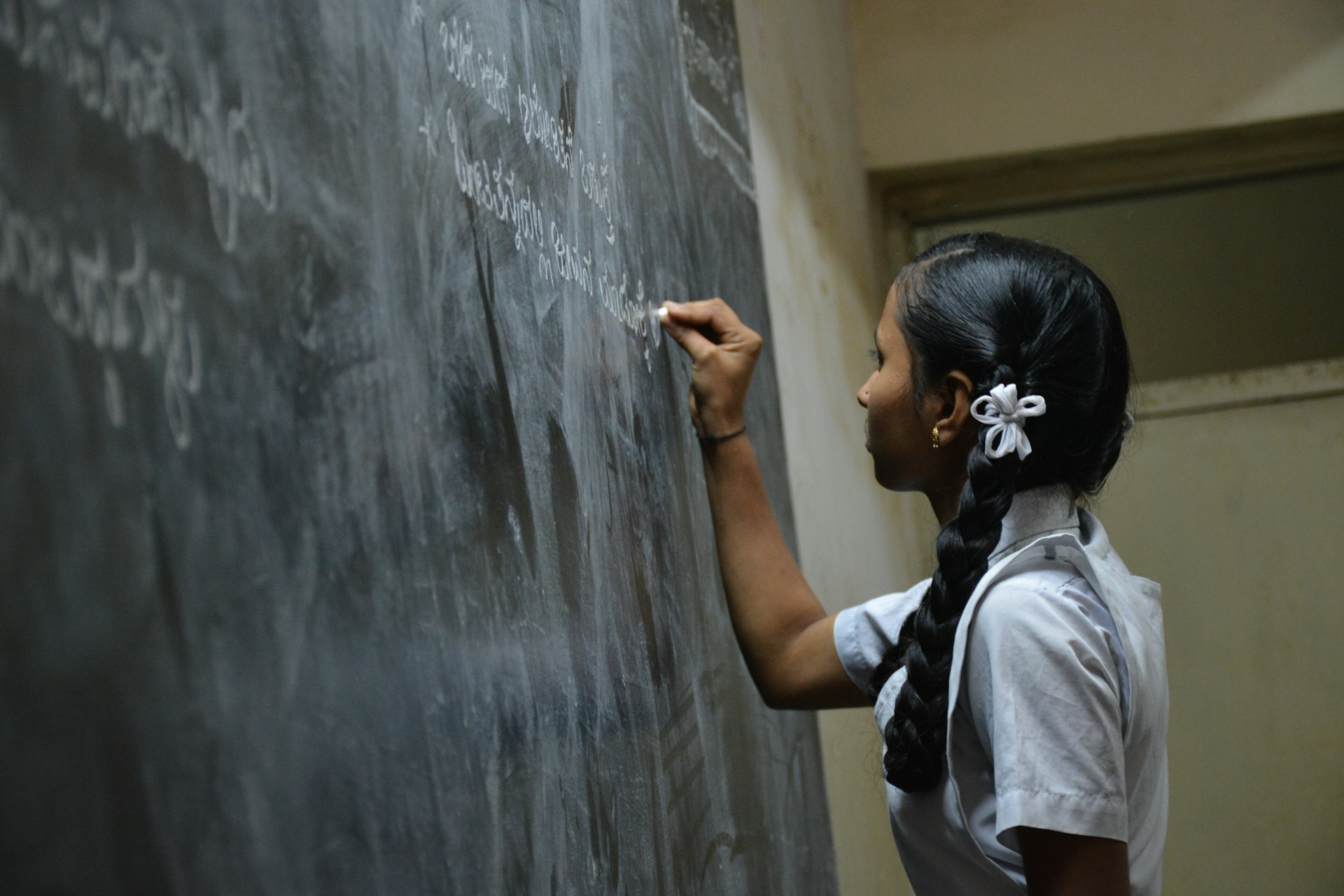
My sister stopped going to school after Class 9 because mummy said there’s no point—girls will get married anyway. She now cooks at home. I study so I don’t have to do the same.
Insight 01
Many parents, especially daily wage earners, do not see value in formal education.

Deepak Verma
Student
I am in class 5 but I still don’t know how to divide. When sir writes numbers on the board, I just look at my friend’s notebook and copy it. Sometimes, I think I’ll understand it next year.
Insight 01
A significant number of students lack grade-level academic proficiency.

Aarti Tripathi
Teacher
“My job isn’t just teaching—I’m also the record keeper, the midday meal planner, the event coordinator, & even a nurse. There are days when I finish more exhausted children.
Insight 01
Teachers face constant administrative pressure alongside teaching responsibilities.
Competitive Research
A thorough analysis was conducted to evaluate direct competitors, focusing on Eduauraa, ConvoGenuis & ThinkZone for their similar target audience, aligned educational goals & innovative delivery methods.
Key Drivers Behind the Comparative Analysis
Studied market trends and offerings.
Analyzed the targeted audience to identify opportunities and spot gaps.
Assessed how existing solutions address unmet needs and identified their USPs.
Hover to flip card
01
Convogenius
ConveGenius is an AI-powered edtech company focused on making education accessible and personalized through conversational AI, assessments, and digital learning tools,
500,000
Students
2,000+
Adopted Schools
Hover to flip card
02
Think Zone
ThinkZone is a social enterprise improving early learning for children aged 3–10 in low-resource areas through tech-driven, community-led programs that build literacy & life skills.
150,000
Students
500+
Adopted Schools
03
Edu Auraa
Eduauraa is a digital learning platform providing affordable, quality education for classes 6–12 and competitive exams through interactive videos, live classes and engaging study materials.
300,000
Students
1,500+
Adopted Schools
Hover to flip card
Building on the Insights
Teachers
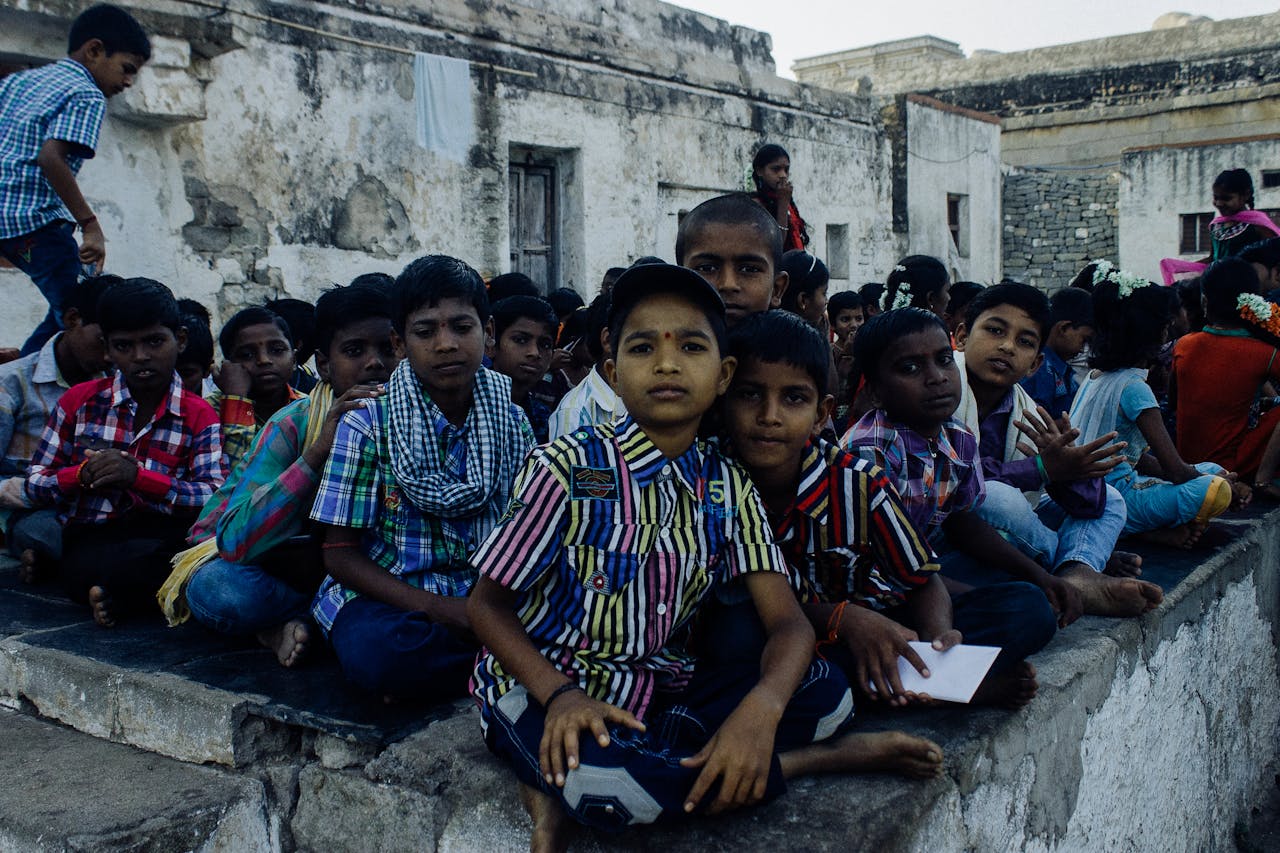
Overloaded rural teachers
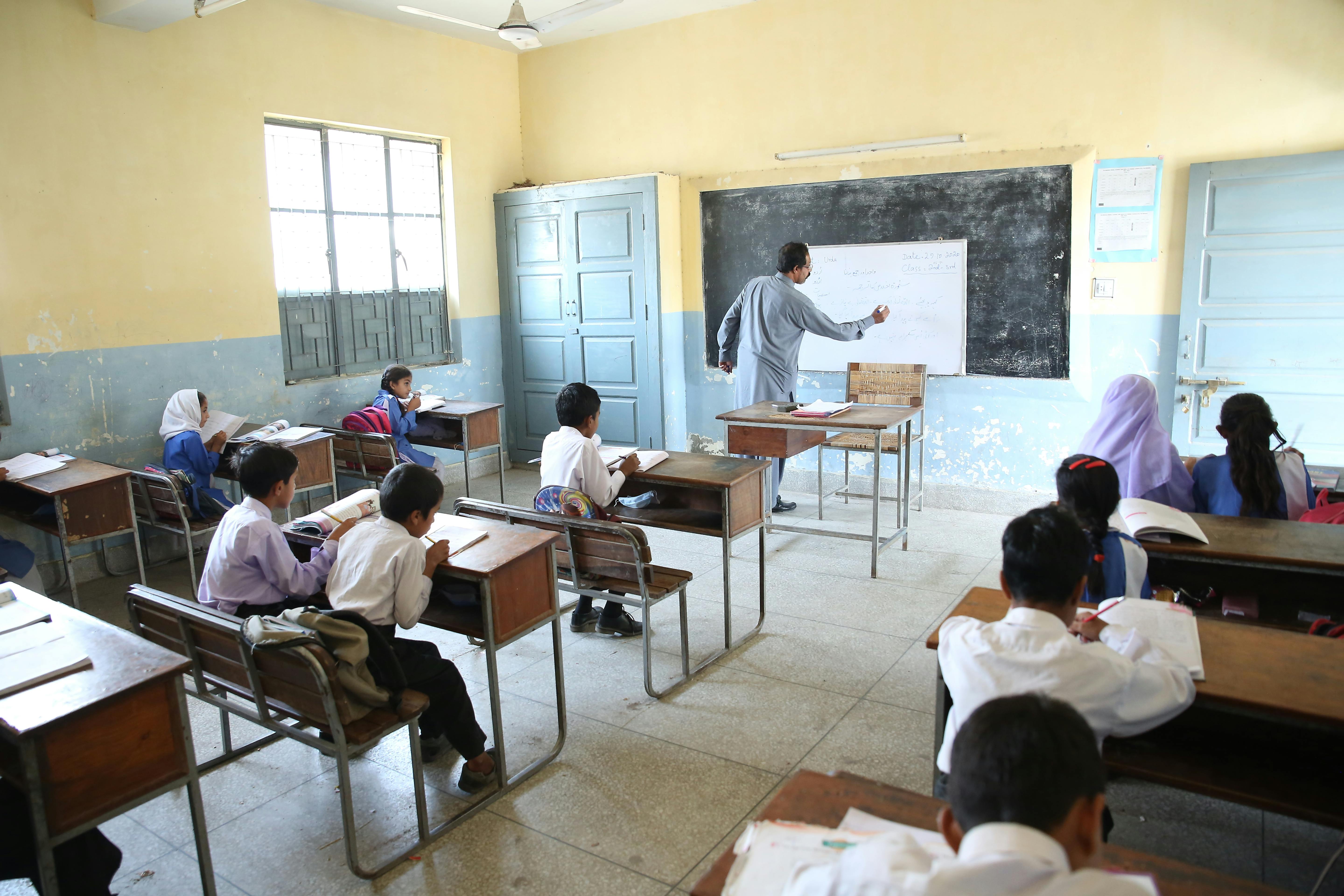
Gap in student infrastructure
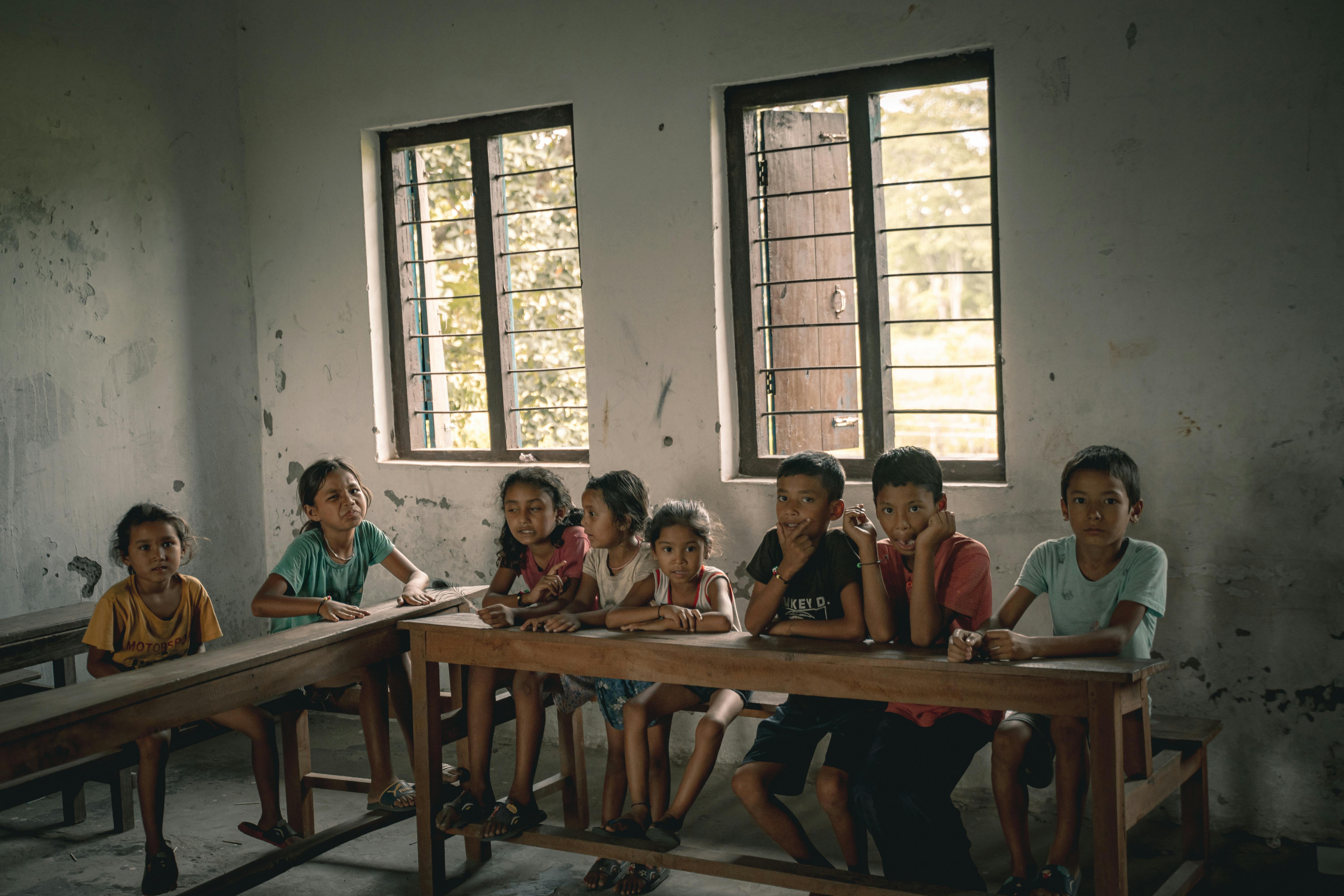
Missing grade level education
Students
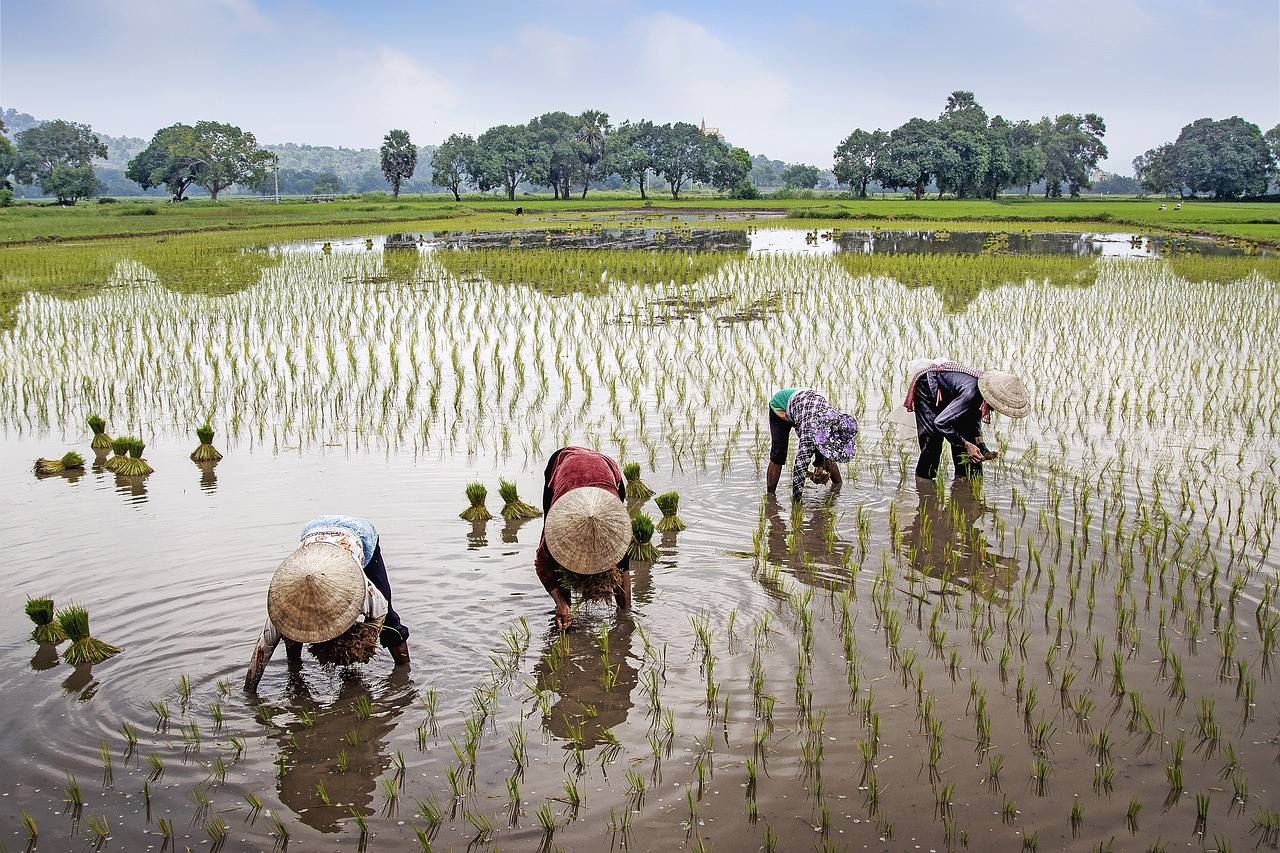
Education versus economic pressure
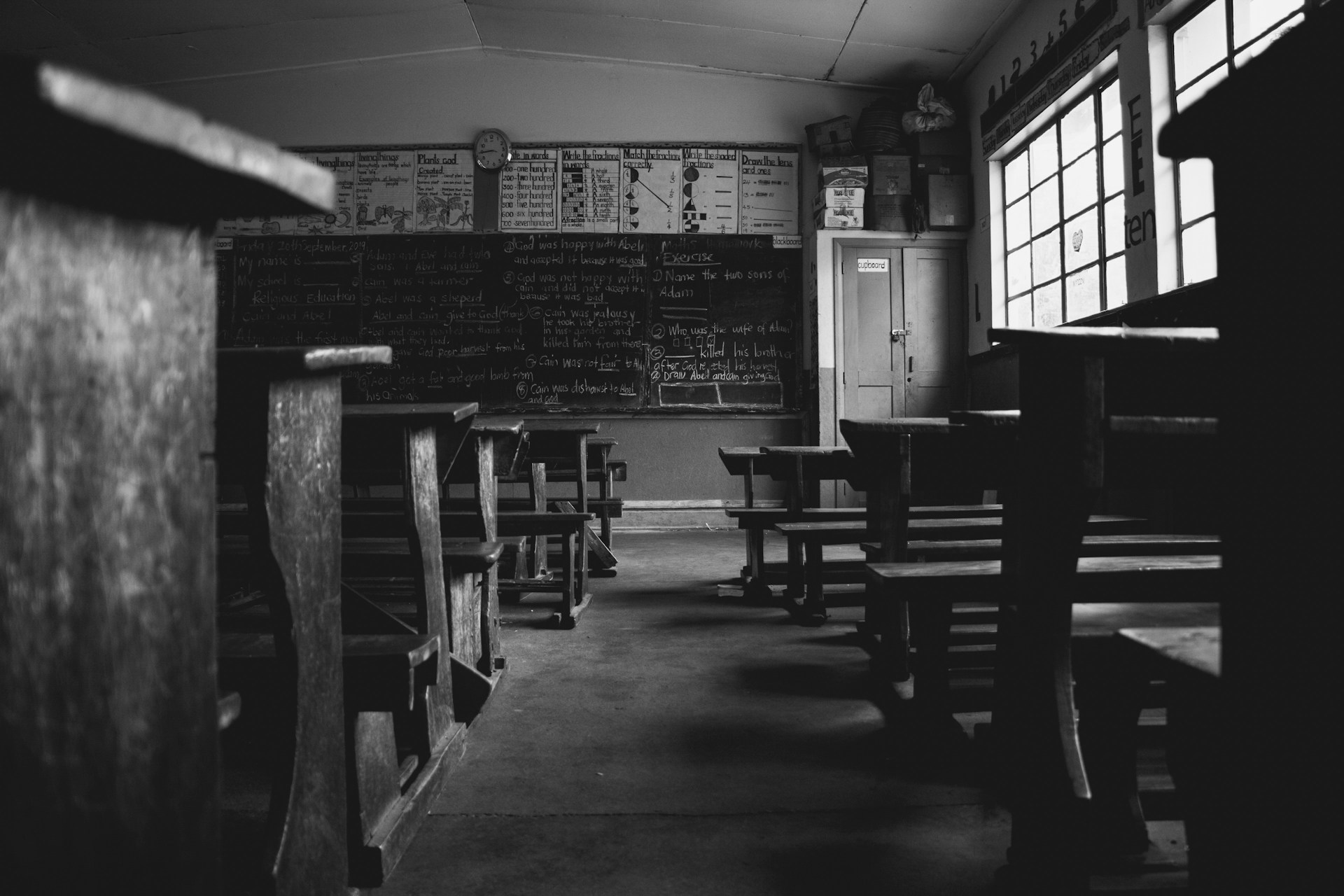
Silent classrooms, hidden doubts

Theoretical learning disconnect
Conceptualizing Solution
After the research phase, I was overwhelmed by the volume of data collected. The main challenge lay in synthesizing and prioritizing this information to define the kind of experience I aimed to create for the users. Through this process, three major challenges emerged:
Key Challenges
Identifying whom are we designing for
Translating user pain points into meaningful and actionable solutions.
Prioritizing these solutions and strategically shaping them into seamless user flows
Target Audience
Students in Classes 6–10 have the lowest grade-level proficiency, the highest dropout rates, and are in a critical phase of brain development; hence, they were chosen as the target audience.
% of students having grade level education
Max. brain development in human
Max. no. of dropouts in school
64 %
80 %
2 %
80 %
84 %
5 %
48 %
96 %
15 %
57 %
72%
9 %
Pre primary
Grades 1 -5
Grades 5 - 10
Grades 11 - 12
Crafting Personas
Insights from the initial research were divided into teachers and students, forming the basis for distinct personas and journey maps.
Why we built personas
This helped in understanding user needs more clearly.
It also pinpointed precise opportunities to improve the journey.
Building teacher's persona

Nandini Chaurasia, Teacher
Age
35 years
Gender
Female
Location
Kanpur
Online Location
Laptop & Computer
Internet Uasge
2 - 3 hrs
Personality
Deeply Dedicated
Resilient Under Pressure
Emotionally Invested
Community Oriented
Resourceful Problem-Solver
Adaptable Thinker
Context
Ramya, a dedicated government school teacher from a rural town near the Andhra-Orissa border, teaches science and math to large primary classes while also managing extracurriculars. With limited resources and a packed schedule, she struggles with planning, engagement, admin work, and parent communication—yet remains committed to improving student outcomes.
Goals & Motivations
Reduce her daily workload by streamlined planning.
Aims to bring engaging, student-first to life.
Focused on improving grade-level education.
Eases the process of managing student evaluation.
Wants to strengthen student support systems.
User’s Emotions & Major Influences
Ramya feels stressed due to a heavy workload and tight schedules.
She struggles to balance teaching, administrative duties, and extracurricular tasks.
Limited resources and tech access leave her frustrated and under-equipped.
She feels anxious about student engagement and whether they truly understand concepts.
She remains motivated to connect with students.
Tracing teacher’s journey
01
Curriculum planning
and instructions
Subtasks
1. The teacher reviews the DOE-directed syllabus.
2. Lessons are planned on a daily, weekly, or monthly basis.
3. The teacher follows the planner and delivers the concepts in class.
4. Based on student understanding, concepts are revisited or doubt-clearing sessions are held.
02
Test and Assignment creation
Subtasks
1. The teacher plans tests and assignments as per the syllabus or DOE/school guidelines and informs students in advance.
2. Tests and assignments are created based on the prescribed assessment model.
3. They are conducted in class or assigned as take-home tasks.
03
Assignment evaluation and Grading
Subtasks
1. Collect and evaluate assignments and test papers in accordance with the curriculum set by the NGO /DOE.
2. Record marks in a spreadsheet and provide constructive feedback to the students.
3. Share grades with students, discuss common errors, and address their queries.
04
Grade Management and Performance Assessment
Subtasks
1. Student grades for each assignment are recorded.
2. Based on that each individual overall performance is assessed.
3. A yearly report card is prepared, covering academic and extracurricular activities.
4. Class performance is evaluated using the compiled student data.
05
Student Support and Performance Improvement
Subtasks
1. The teacher provides constructive feedback to help improve individual student performance.
2. In parent-teacher conferences, results and ways parents can support improvement are discussed.
3. The teacher and school management review areas for overall improvement.
Building student's persona

Suman Patel, Student
Age
12 years
Gender
Female
Location
Kanpur
Online Location
Laptop & Computer
Internet Uasge
2 - 3 hrs
Personality
Curious Learner
Playful and Social
Easily Distracted
Resilient & Empathetic
Shy but Thoughtful
Adaptively Intelligent
Context
Aadhira Krishna, is a curious 5th grader balancing school and family duties. With parents working as silk weavers and a home environment that values earning over learning, she struggles to focus on studies but stays motivated to improve and support his family and sister. Her growing interest in learning is often challenged by limited resources and expectations at home.
Goals & Motivations
Wants to get better grades in school.
Loves discovering and exploring new things.
Aims to gain a better conceptual clarity.
Ease her family’s hardships through education.
Stay organized with studies, tasks & deadlines.
User’s Emotions & Major Influences
The user is naturally curious and eager to learn but often feels bored during long, traditional lectures, hindering engagement.
Anxiety before tests and deadlines is a common challenge, compounded by shyness in asking questions during class.
Family expectations and economic background deeply influence their educational experience and aspirations.
Tracing student’s journey
01
Class Attendance and Clarification
Subtasks
1. The students have a rough idea of what is being taught in the classroom today.
2. He attends the classes daily and understands the concept but feels boredom with listening to the classes continuously.
3. He clarifies his queries from the teacher on the doubtful concepts.
02
Deadline Tracking and Study Planning
Subtasks
1. The students ensure they submit the assignment/test to the teacher by the given deadline.
2. The students prepare a study plan based on the announcements and instructions from the teacher.
3. They then prioritize tasks based on the urgency of the requirement and available time.
03
Assignment Completion and Test Preparation
Subtasks
1. The student prepares thoroughly for the tests or assignments conducted by the teacher in the classroom.
2. The students download and complete the assignment from the teacher before the deadlines. or attends the test conducted by the teacher.
04
Graded Script Review and Feedback
Subtasks
1. The students collect the evaluated papers and marked assignments .
2. The students revisit the question paper carefully and review their mistakes for better understanding.
3. The students then clarify any doubts in the answer scripts and receive detailed feedback on their performance.
05
Grade Monitoring and Performance Evaluation
Subtasks
1. The student monitors their performance in each individual subject.
2. They also assess their overall performance and receive feedback from the teacher.
3. They try to improve their conceptual clarity and ask questions to resolve doubts.
Constructing HMWs
Upon uncovering the clear user needs and their emotional trigger points, I prioritized the pain points by evaluating their frequency of occurrence across the journey and their alignment with core user goals. Each prioritized pain point was then reframed into " how do we solve this " question.
From Problems to Possibilities
Framing HMWs helped to move beyond just spotting problems and explore multiple ways to solve them.
They also provide structure to ideation, ensuring every idea directly addressed user needs.

Pain point 01
Teachers are overwhelmed with multitasking in under-resourced, multi-grade classrooms, leading to burnout and diluted instruction.
How might we reduce the burden on single teachers in rural schools while ensuring quality learning across grades?
Pain point 04
The digital divide, compounded by limited tracking of student growth beyond academics, excludes holistic development in rural learning.
How might we design inclusive digital solutions that work offline and capture a child’s all-round growth?
Pain point 05
Students disengage due to a curriculum that fails to connect learning to their daily lives or future opportunities.
How might we make classroom learning more relevant and relatable for rural students?
Pain point 02
Socioeconomic and gender-based pressures force students to prioritize short-term family needs over long-term education.
How might we create supportive ecosystems that encourage families and communities to prioritize children’s continued education?
Pain point 03
Students fall behind academically early on due to unaddressed foundational learning gaps, making it difficult to catch up later.
How might we identify and address grade level education gaps before they become permanent academic roadblocks?
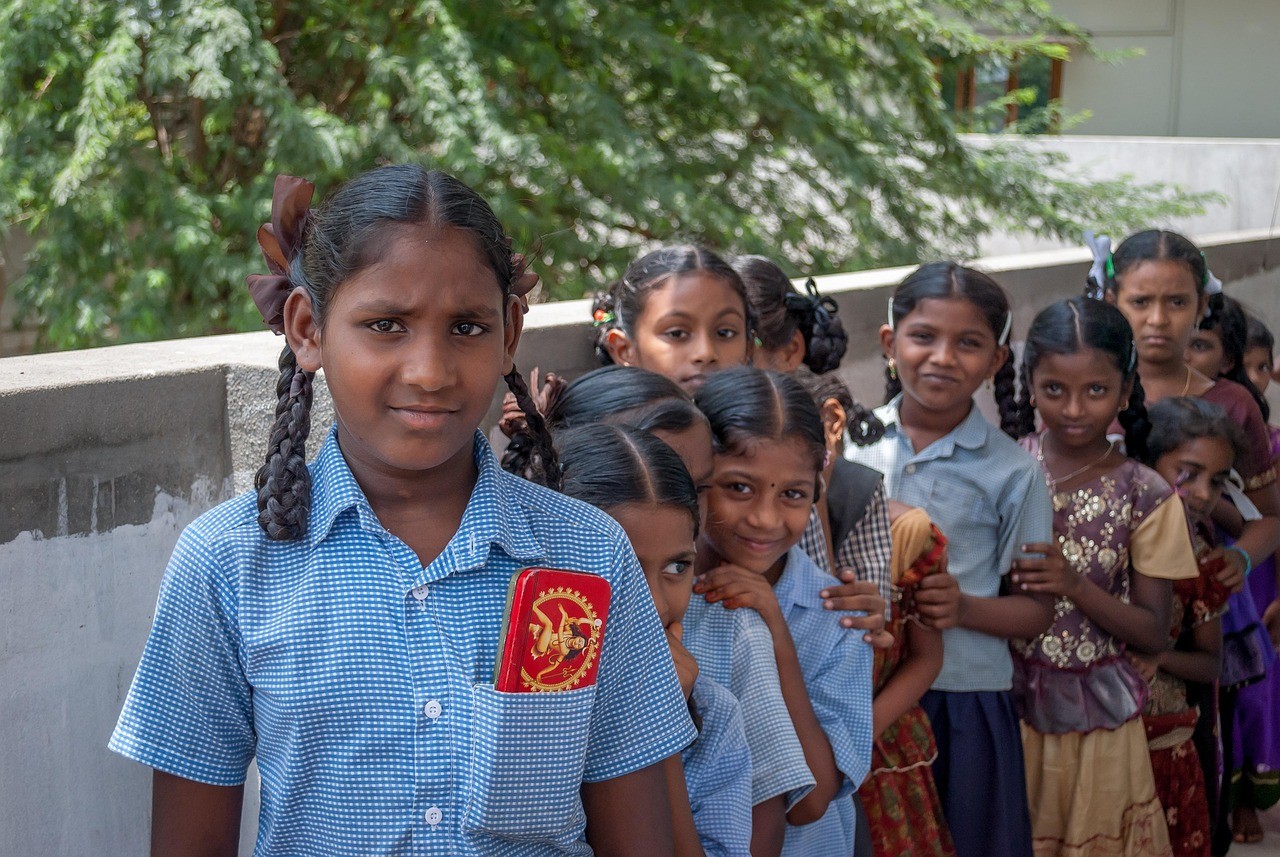
Pain point 06
Students lack safe and inclusive spaces to express doubts and develop confidence in their learning journey.
How might we foster emotionally safe classrooms that empower every student to speak, question, and explore without fear?
Turning Ideas into Themes
Once the HMWs were constructed, solutions were brainstormed from both teacher and student perspectives to enhance their respective experiences.
Clustering Approach
Organized into themes aligned with the pedagogical principles of NEP 2020, emphasizing activity-based and experiential learning.
Designed to ensure solutions did not create a double burden for either students or teachers.
Idea Board ( After Brainstorming )

Grouping into themes

Prioritizing themes
Clustering the themes revealed that pursuing all design goals at once was impractical.
Iteration 01
Fostering teacher-student interaction
Strengthening grade-level learning within existing pedagogy.
Outcome : These were organized under the themes of Schedule, Teach, Apply, Revise, and Gauge to streamline the learning experience.
Once this foundation was established, attention shifted to
Iteration 02
Reducing the administrative burden on teachers
Enhancing student engagement and participation.
Outcome : These were organized under the themes of Enhance and Transform.
1. Schedule
Track deadlines & visualize progress. This creates a shared structure & reduce confusion.
3. Apply
After lessons, students work on solving related problems in class, encouraging active learning.
5. Gauge
Teachers conduct short assessments or quizzes—timed and tracked continously.
7. Transform
Once foundational clarity is achieved, students are introduced to advanced concepts
2. Target
Teachers introduce new concepts using clear explanations sets stage for comprehension.
4. Revise
After the classroom, the schedule prompts students to revisit lessons & ask queries.
6. Enhance
Student who need additional support are put into personalized enhancement modules.
Iteration 1
Iteration 2
Building tangible features
These themes were translated into platform features with clear objectives. Each feature was crafted to directly address user goals in teaching and learning.
For teachers
Reducing administrative load while fostering stronger student engagement.
For Students
Elevating grade-level learning and supporting holistic development.
Use the tabs below to switch between different features of the platform
Home
Schedule
Live Class
Forum
Exams
Grades
Exercises
Voc. Ed.
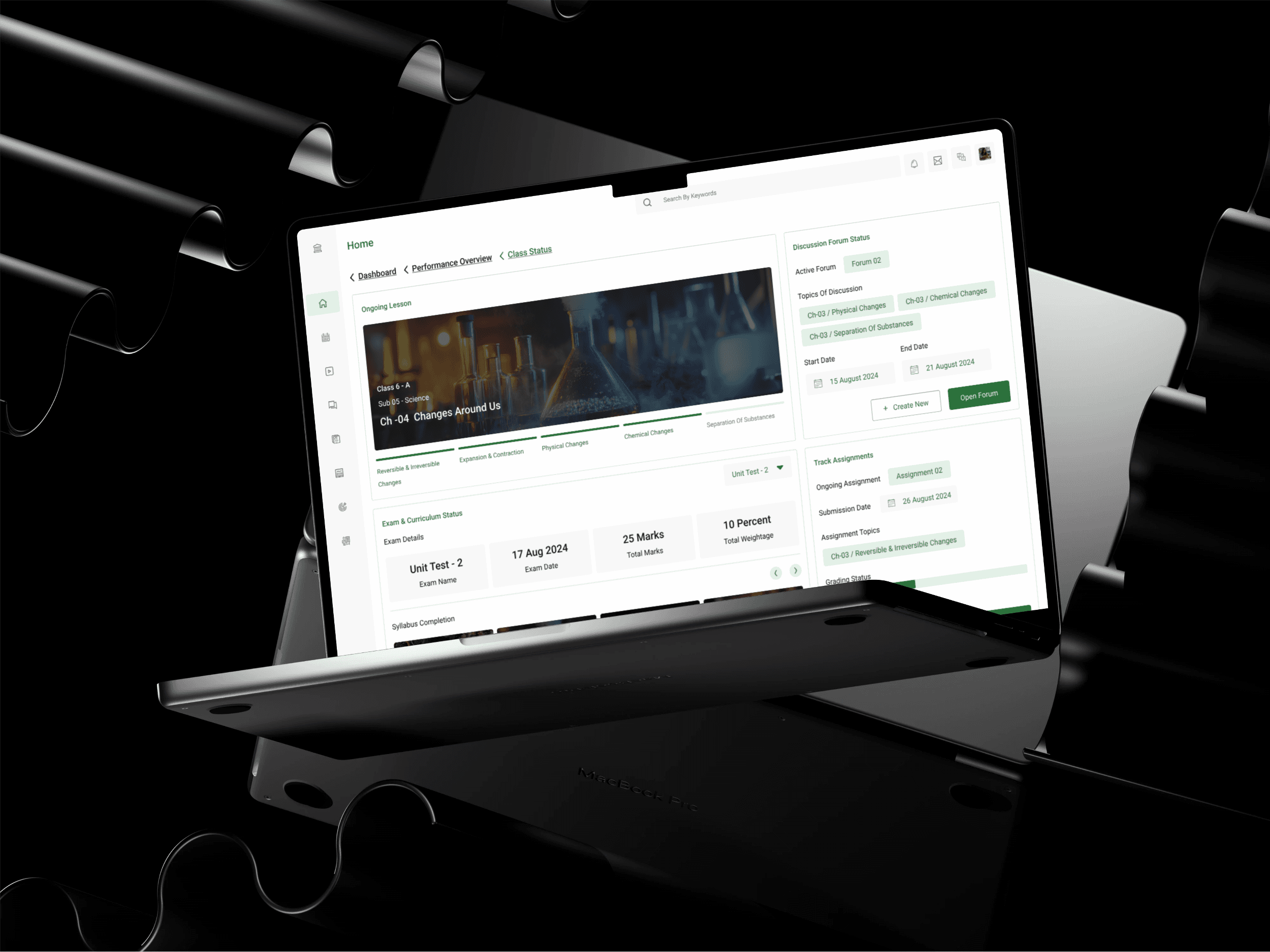
Home — “Your Learning Lighthouse”
All journeys start here. A personalized dashboard that lights the path, shows daily highlights, and keeps students & teachers aligned in one glance.
Building sitemaps
Once the platform features were finalized, the user flows were divided into two distinct parts—one tailored for teachers and the other for students.
Why Separate User Flows Worked Best
Separating flows reduced complexity, helping each group focus only on what’s relevant.
It improved efficiency by letting teachers and students achieve goals faster without overlaps.
The approach ensured scalability, allowing new features to be added without disruption.
Student Section
Teacher Section
Student’s User Flow
1.0
Home Page
Select day
Select subject
2.0
Plan Schedule
In progress tasks
Completed tasks
View curriculum
3.0
Live Class
Select subject
4.0
Discussion Forum
Select subject
5.0
Exam Schedule
Select subject
7.0
Practical Exercises
Select subject
8.0
Vocational Ed
Select courses
Manage points
8.1
Buy Course
With the points gained from quizzes buy courses
8.1.1
Start Courses
Complete Module
End session
8.1.1.1
Practice Activity
Complete the task assigned by teacher & in the modules
7.1
Select Exercises
Assigned by peers
Assigned by teachers
Challenge peers
Practice yourself
7.1.1
Assigned exercises
View details
Comprehensive type questions
Description type questions
Listening type questions
Case study type questions
Submit details
6.0
Grading Status
Select subject
Report card
Performance analysis
Check message
Check assigned practice exercise
6.1.1
Check Remarks
Get feedback from the teacher
6.3.1
Subject Analysis
Doing an in depth subject wise analysis of the student performance
7.1.2
Challenge peers
Select peers you want to challenge
7.1.2.1
Create Quiz
Select the attempted quiz
Select the peers
Set coins & deadline
7.1.3.1
Test yourself
View progress/results
Gain points & challenge others
7.1.1.1
View Results
Check results
Get rewarded
Raise queries
7.1.1.1.1
Start conversation
Connect with peers & teachers
7.1.3
Practice yourself
Select the quiz
6.1
Report Card
Check grades assigned
View Remarks
6.2
Student Analysis
Doing an in depth overall analysis of the student performance
6.3
Select Exam
Subject Analysis
Engagement Metrics
Check Remarks
5.1.1
Ongoing Assignment
Select assignment
5.1.1.1
Yet to submitted
View question paper
Submit assignment
5.1.1.2
Submitted/Graded
View question paper
View answer script
Raise a query
5.1.2
Closed Assignment
Select assignment
5.1.3
More Information
View syllabus completion status
5.1.3.1
Curriculum Info.
Select Exams
5.1.1.2.1.1
Question paper
Compare your answer script
5.1.1.2.1.2
Raise a query
Start conversation with teacher
5.1.1.1.1
Submit assignment
Upload your answer script
Raise a query
5.1.1.2.1
Answer Script
Check grades & remarks
View question paper
Raise a query
5.1
Select Assignment
Select chapter
Ongoing assignments
Closed assignments
More information
4.1
Select Forum
Select chapter
Open forum
Closed forum
More information
4.1.1
Open/Closed Forum
Select Forum
4.1.1.1
Give Response
Awaiting response
Answered queries
Flagged questions
All student queries
4.1.2
More Information
View syllabus completion status
4.1.2.1
Curriculum Info.
Select Exams
3.1
Select Classroom
Start class
Select subtopic
Select chapter
2.1
View Curriculum
Select subject
2.2
Plan Activity
Select exam section
Add task
3.1.1.1
Streaming Subtopic
Select chapter
Select subtopic
3.1.1.1.1
Class On Air
Assess your learning
End class
3.1.1.1.1.1
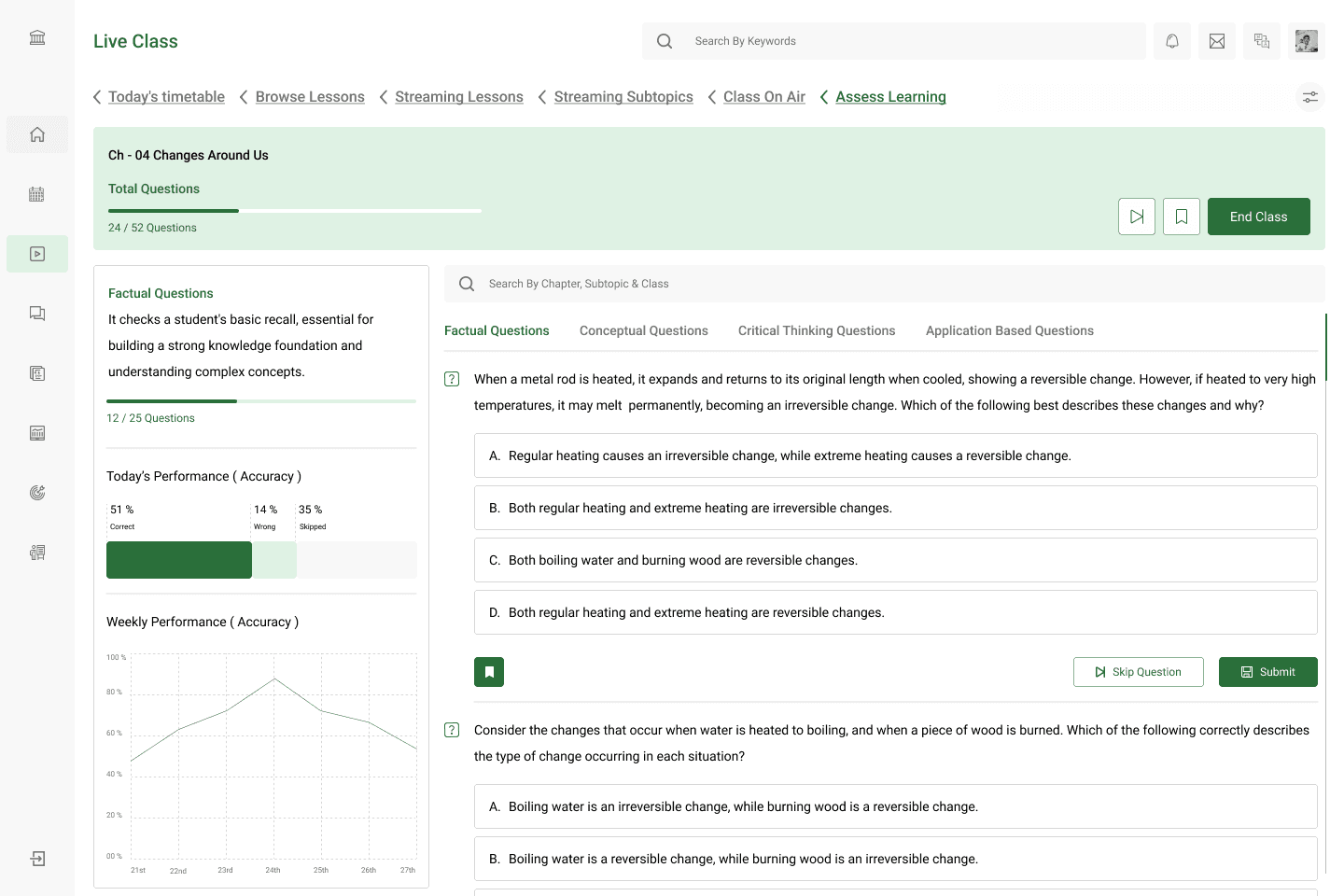
Assess Learning
Factual questions
Conceptual questions
Critical Thinking questions
Application Based questions
3.1.1.1.1.2
End Class
Check progress
3.1.1
Streaming Lessons
Select exam
Select chapter
1.1
Class Progress
Select subject
1.2
Current Status
Select exam
Open forum
Ask a question
View details
Raise a query
Crafting Interfaces
Once the user flows of the teachers and students were defined, the major challenge was translating them into screens and validating the designs. At this stage, there was a lack of clarity on how to proceed, leading to several critical questions:
Questions to answer
What should be designed first?
What should our visual design language be?
Have we truly validated user expectations?
Iteration 1
Educator's Toolkit
Core Objectives
Streamline the teaching experience by reducing time spent on external tasks.
Enable teachers to focus more on building meaningful engagement (collagium) with students.
01
Home Section
02
Schedule Section
03
Live Class Section
04
Forum Section
05
Exam Section
06
Grade Section
07
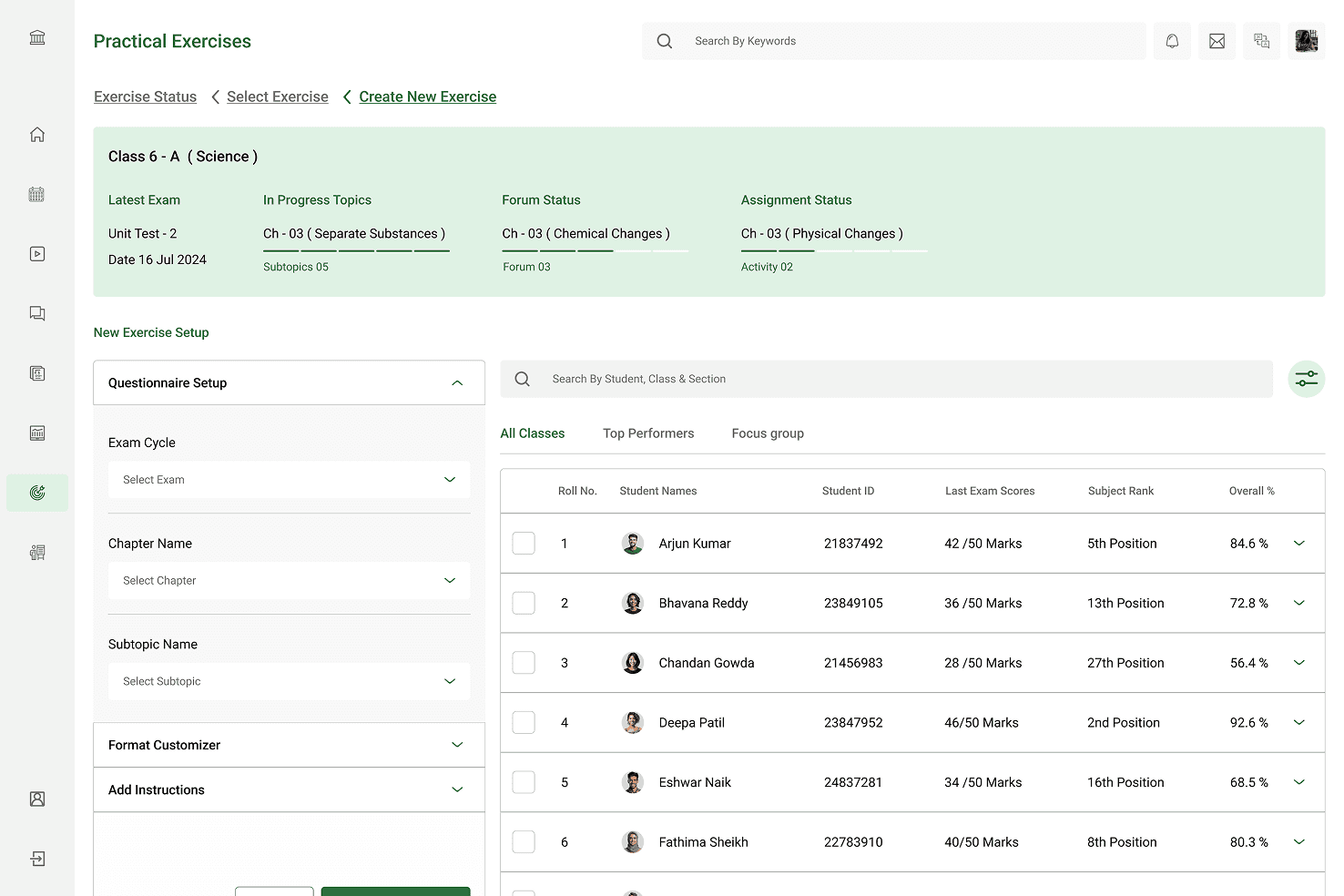
Exercise Section
08
Voc. Ed. Section
Student Resource Kit
Core Objectives
Strengthen the implementation of pedagogy within the student learning experience.
Place students on a clear path of continuous improvement.
01
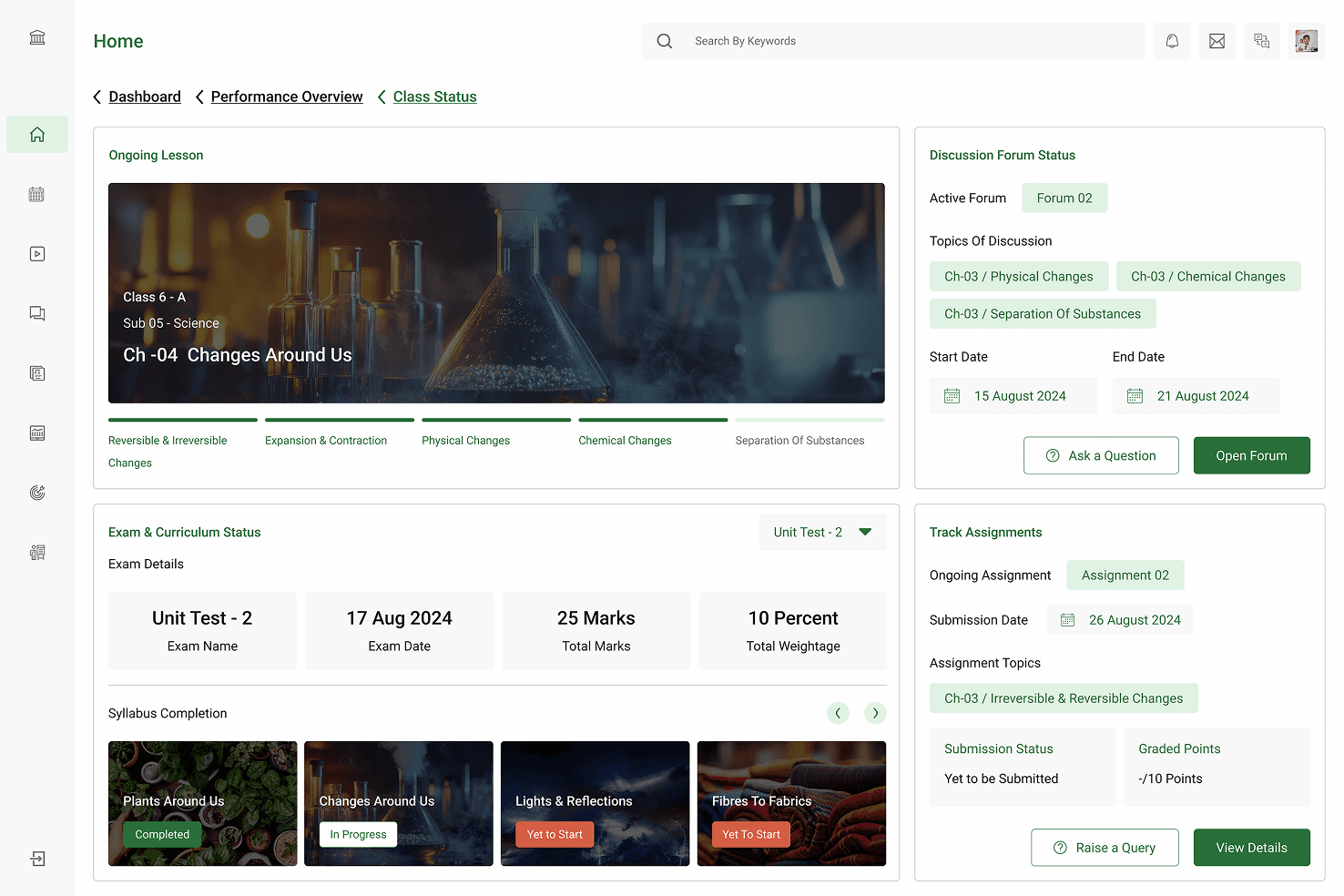
Home Section
02
Schedule Section

03
Live Class Section
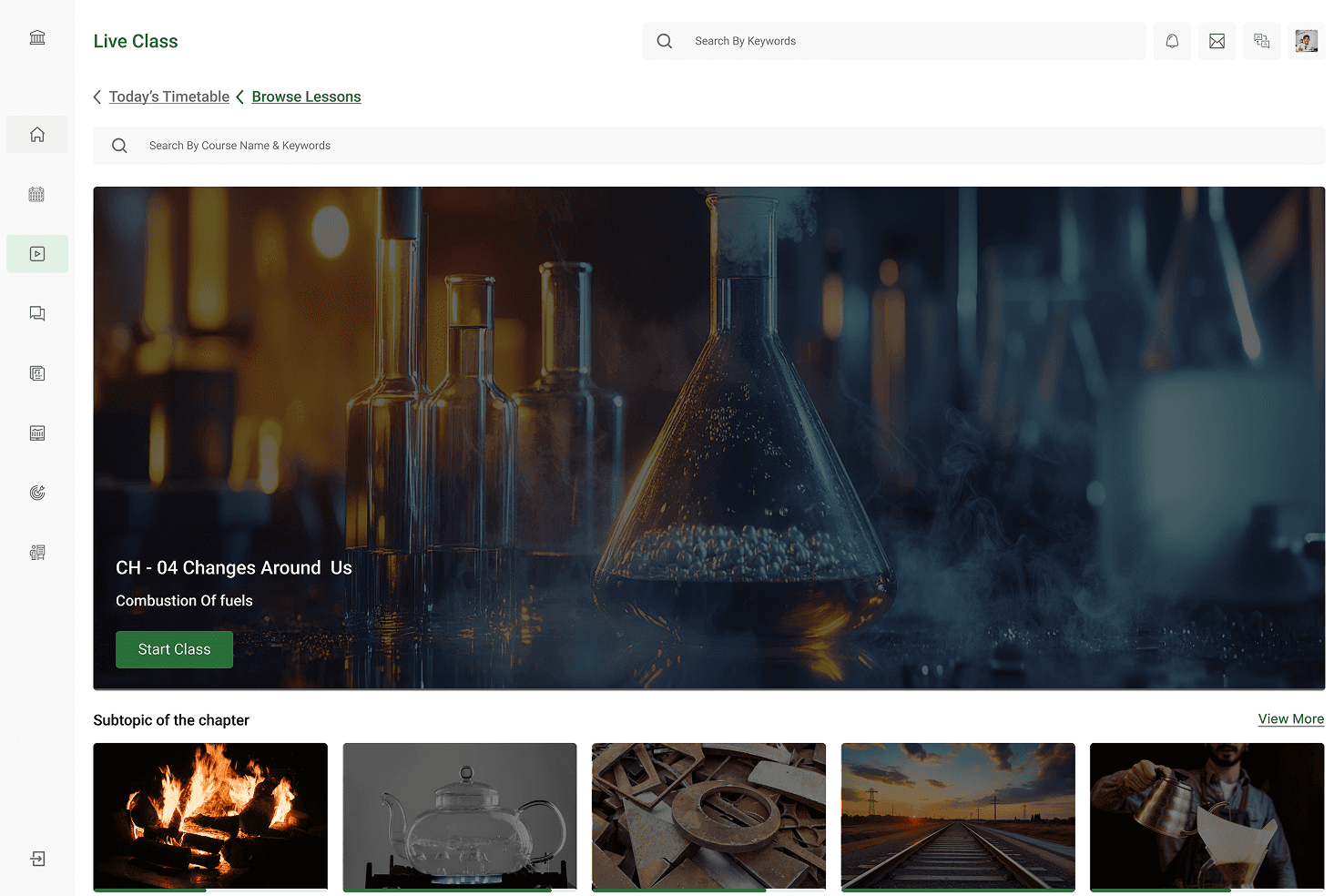
04
Forum Section
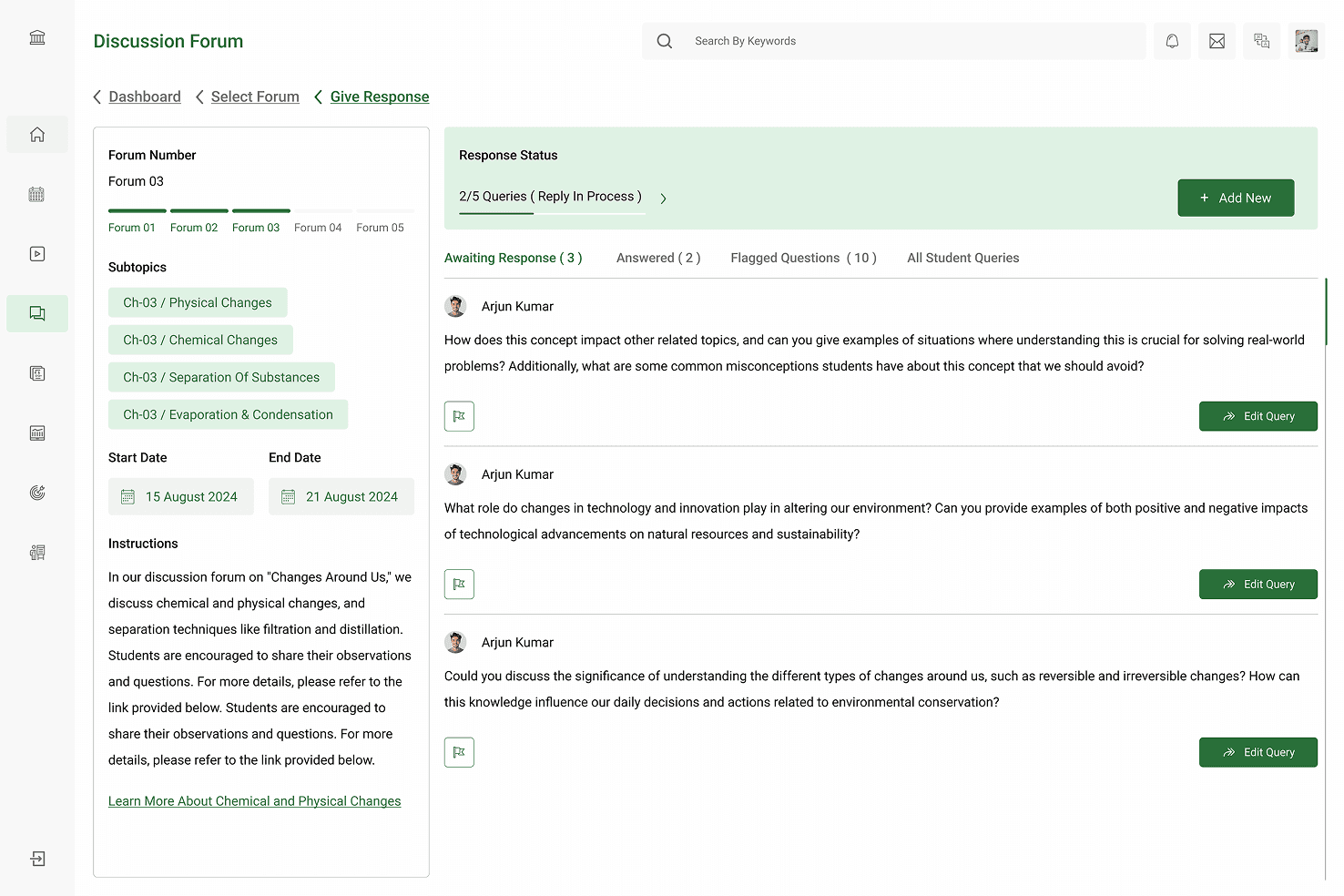
05
Exam Section
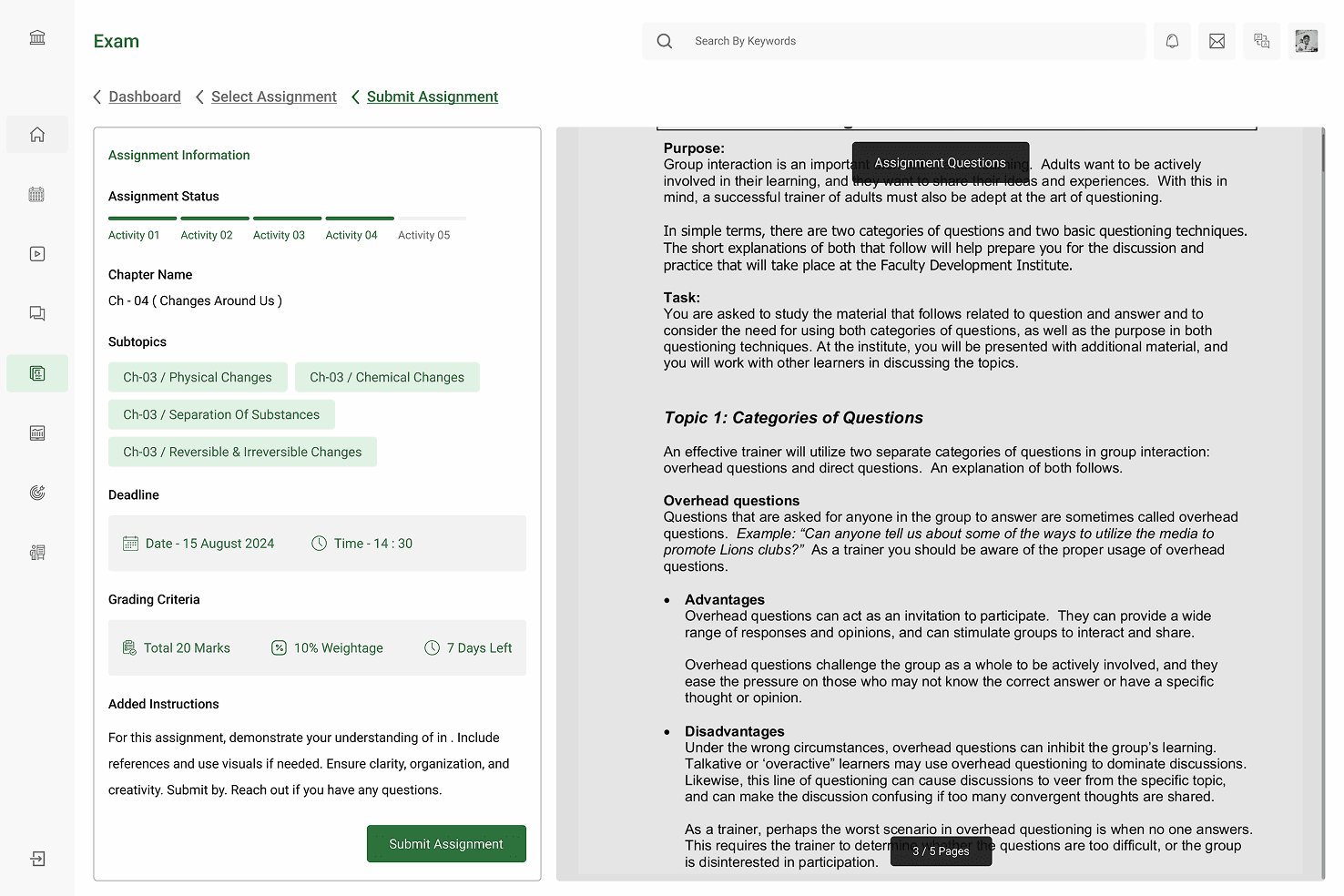
06
Grade Section
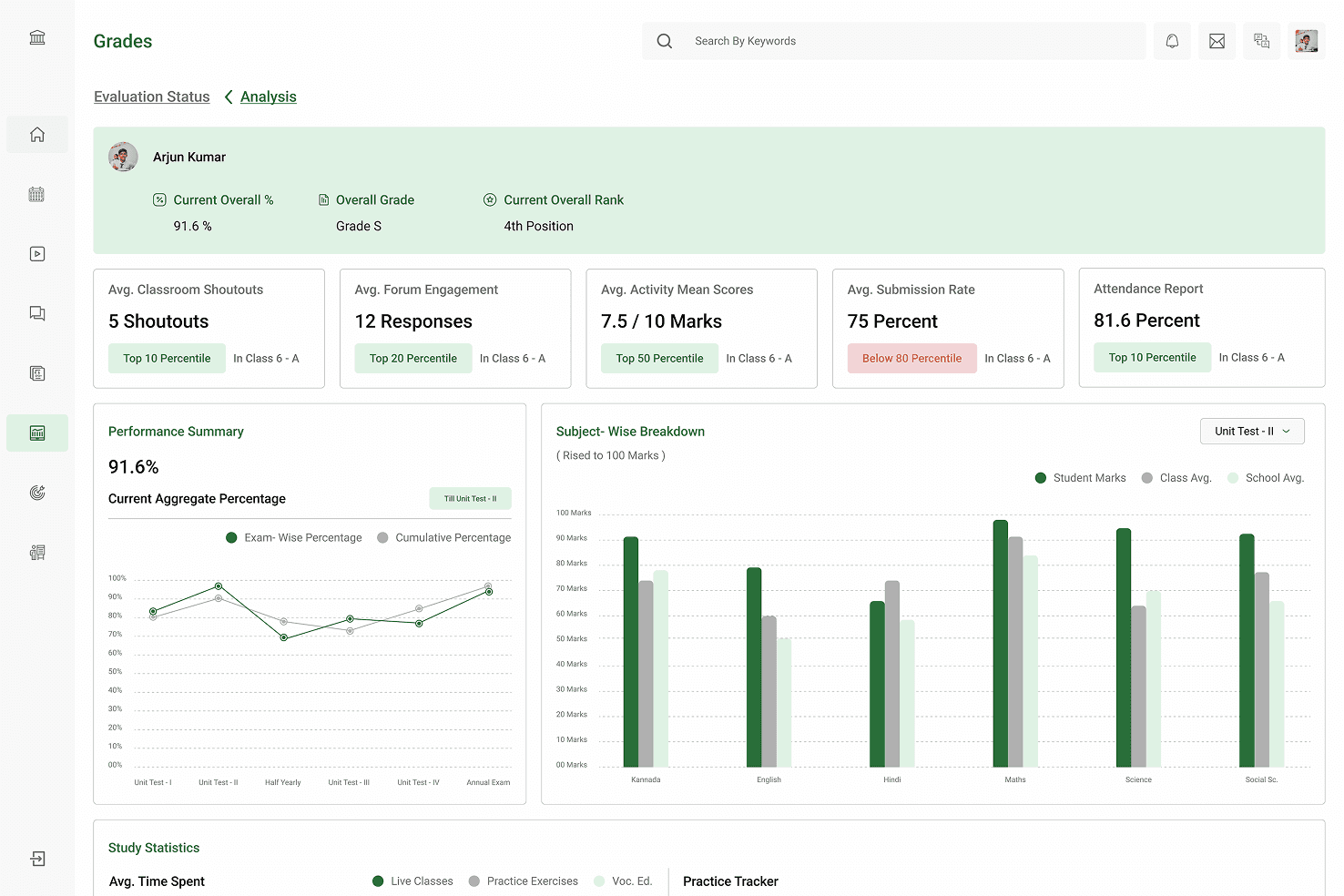
07
Exercise Section
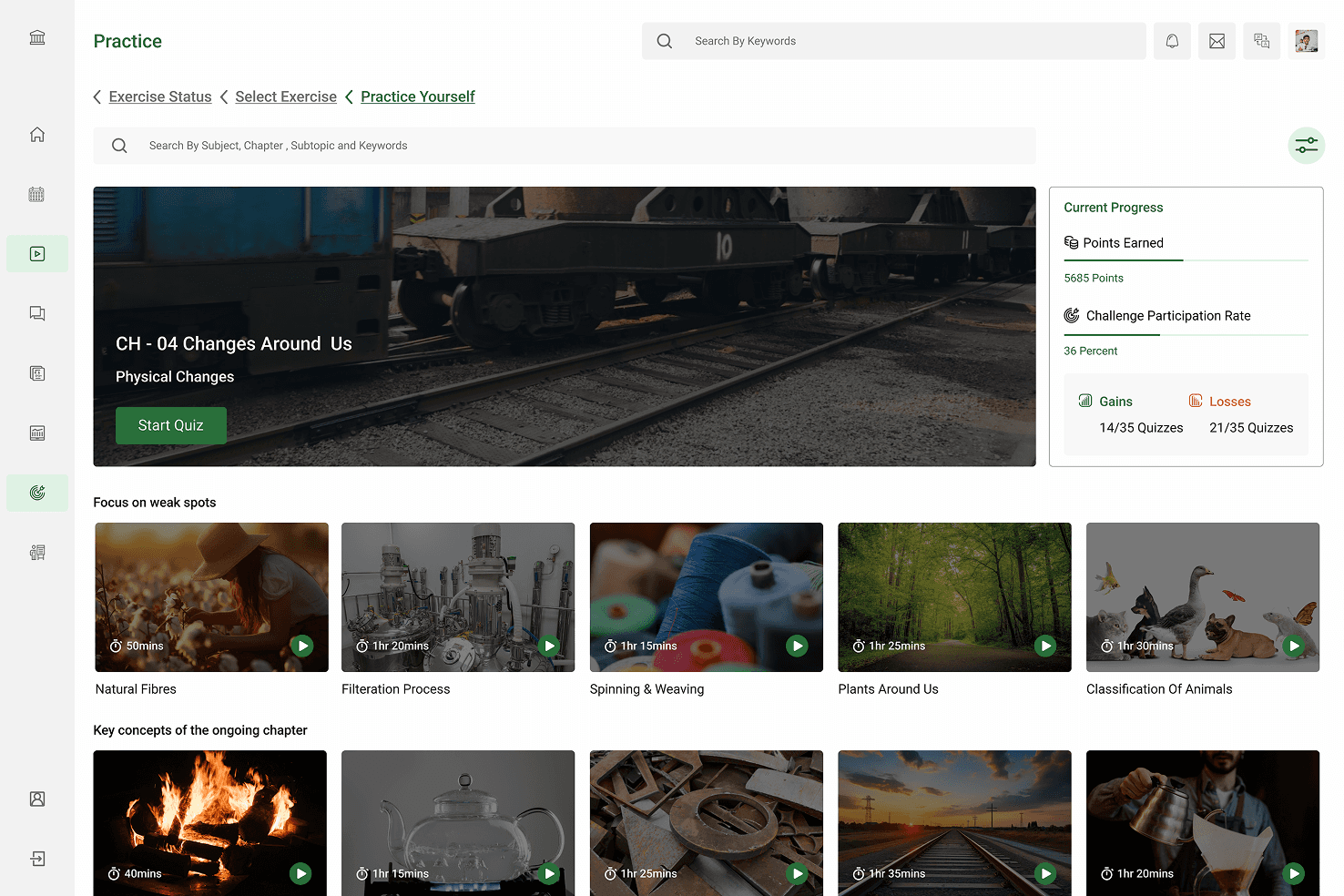
08
Voc. Ed. Section
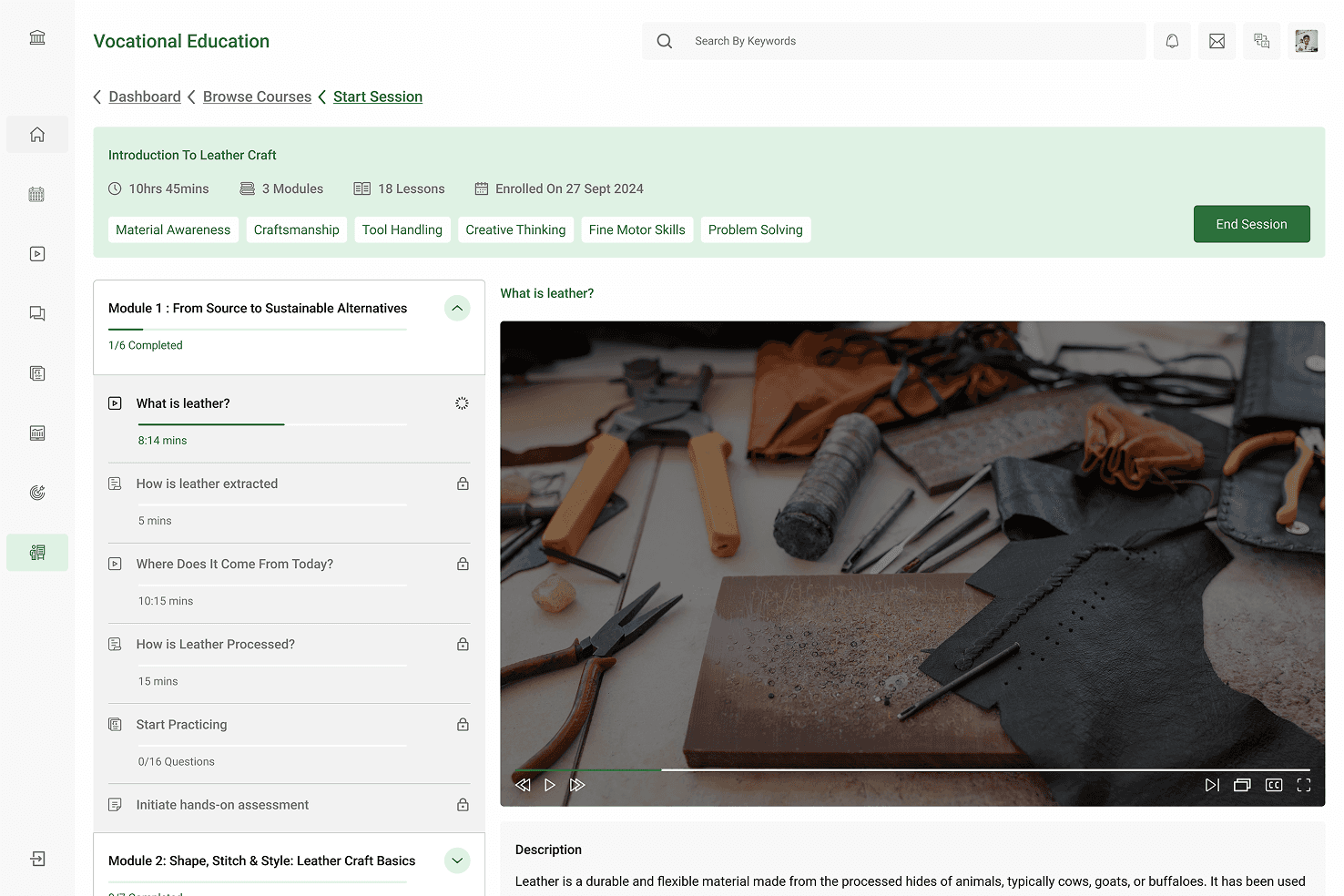
Beyond the Classroom
Why a mobile version
Students can revisit lessons & practice at their own pace, anytime & anywhere, supporting flexiblity.
Learners can control their progress through self-paced learning &reinforce understanding outside the classroom as well.

Assess performance in exams

Assess learning

Revisit your classroom videos

Schedule your task

Review Grades

Vocational Education
Usability Testing
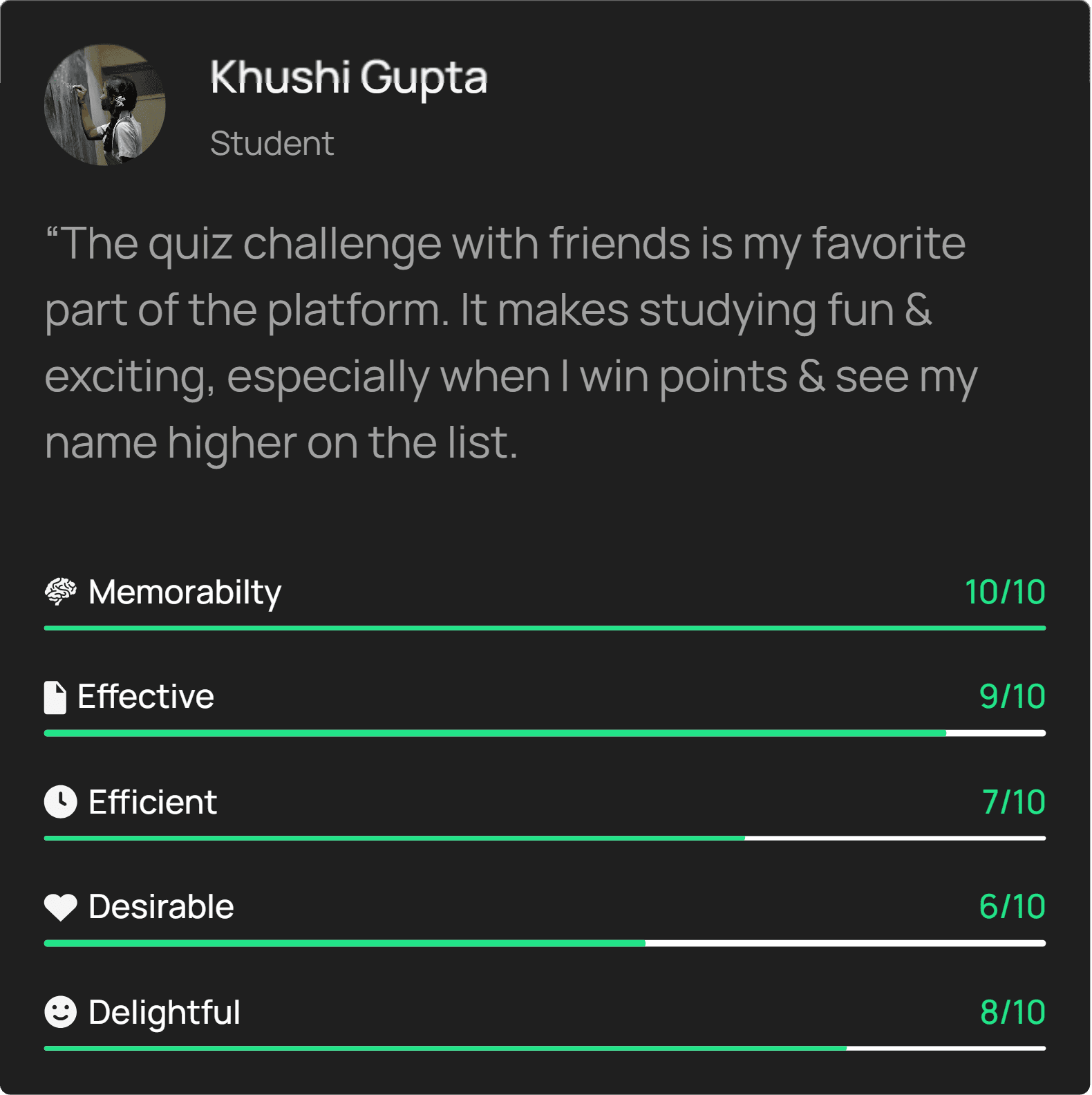
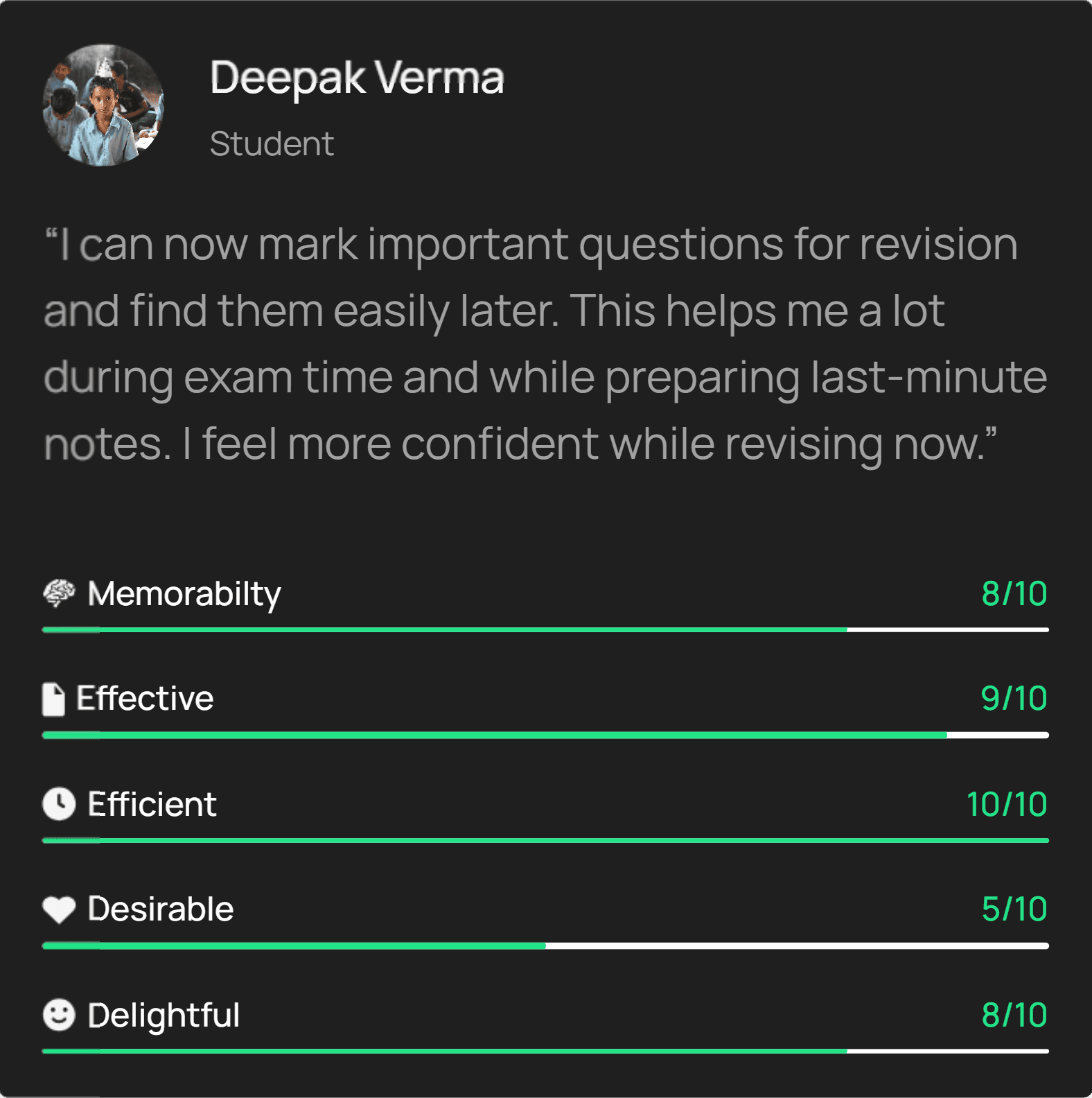
It was conducted over a period of three weeks. An unmoderated testing methodology was employed to gather authentic user feedback. A total of 25 participants took part in this process, providing insights that helped refine and validate the design.
Key Testing Objectives
Ensure the platform addresses real classroom challenges, not assumptions.
Test the intuitiveness of new features like percentile metrics, gamified challenges, & earned-point access.
Identify friction points in engagement, forum interactions, and practice exercises.
Impact on Overall Experience
Improved clarity & motivation for students, as progress & achievements became visible & rewarding.
Enhanced classroom engagement, more structured, meaningful, & measurable.
Key Performance Indicators
Task completion rate
The percentage of users who complete a task without assistance, indicating how effectively they can achieve their goals.
User error rate
The average number of errors made by users while completing a task, helping identify usability issues that may confuse or mislead.
Avg. task on time
The average time users take to complete a task, indicating how efficiently the interface supports quick task completion.
Insights from the users



Iterating based on user insights
Every conversation, every test, every moment of confusion revealed something valuable. Guided by empathy, the design evolved into a tool capable of turning challenges into moments of clarity and meaningful growth for students.
Iteration 2
Crafting Hooked model
Why the Hooked Model
Addressed low focus, poor participation, and weak retention.
Encouraged consistent engagement through meaningful triggers and rewards.
Targeted support for students who needed additional motivation, especially female learners.
How it enhances learning
Motivates students to participate actively in lessons.
Helps learners connect classroom content to real-life applications.
Improves understanding and overall academic performance.
01
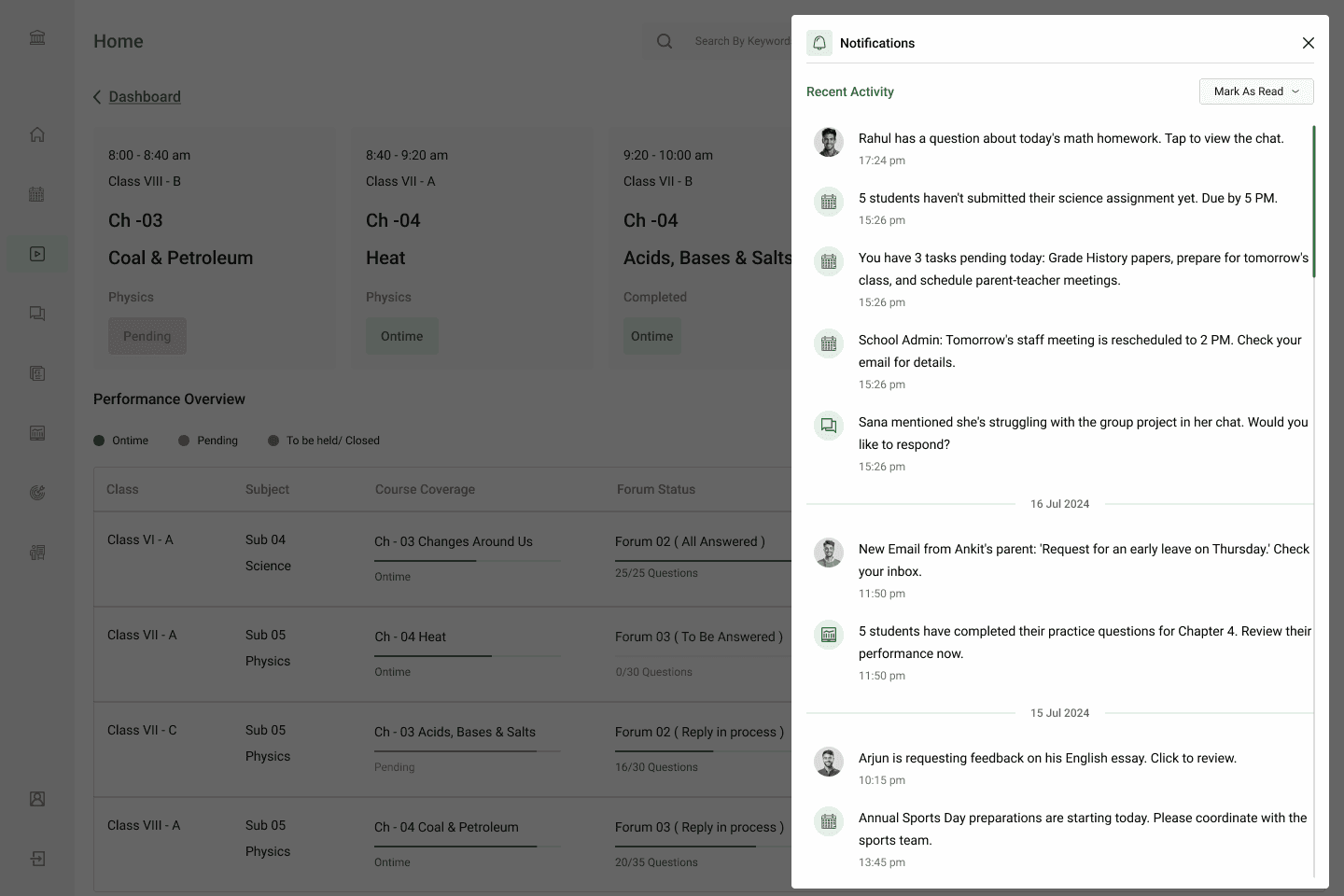
Triggers
02
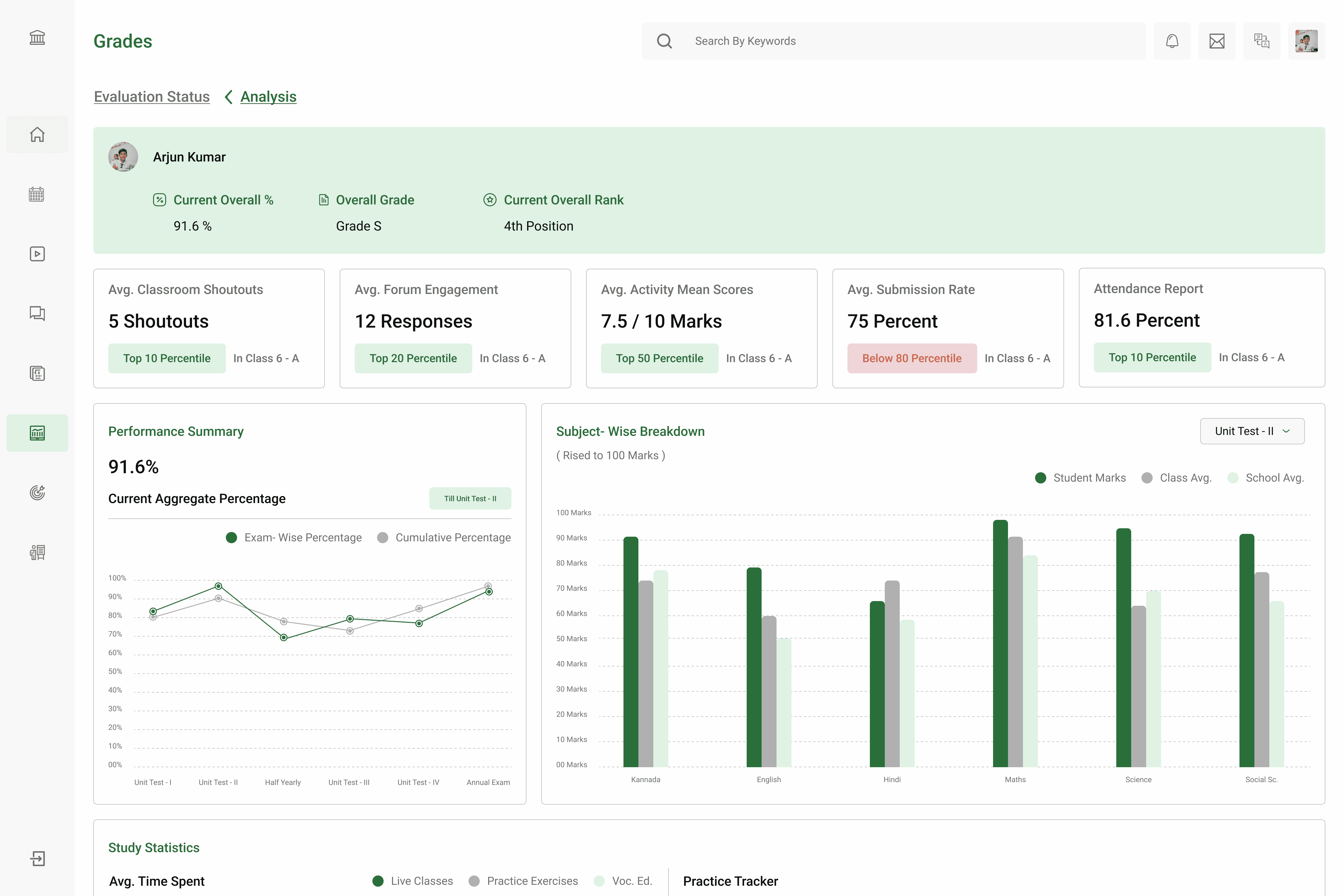
Actions
03
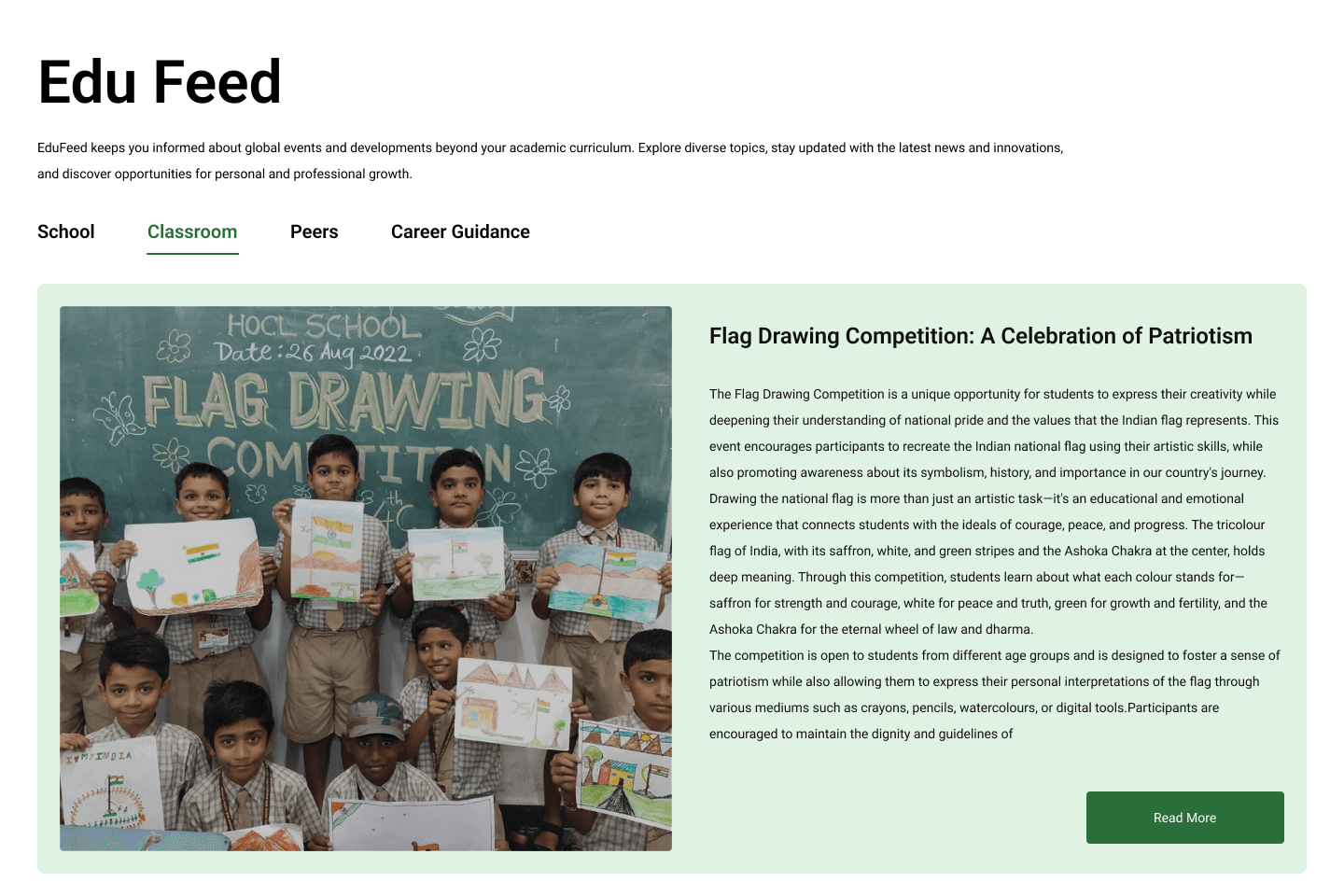
Rewards
04
Investments
Cognitive load reduction
for teachers
Unlocking Teaching Potential
Teachers can focus more on students needs rather than administrative tasks.
Reduced mental load enables better lesson planning and meaningful classroom interactions.
Workload reduction lowers stress and improves long-term effectiveness.
Engagement & Performance Metrics Dashboard
Real-time insights to help personalize teaching and identify learning gaps.
Demographics Metrics
Student Engagement Metrics
Performance Metrics
Student Metrics

Arjun Kumar
Avg. Forum Engagement
12 Responses
Top 20 Percentile
Avg. Forum Engagement
12 Responses
Top 20 Percentile
Overall Class Metrics
23/40 Boys
17/40 Girls
Enrolment Rate
85.68 %
Dropout Rate
18.97 %
Attendance Rate
95.98 %
Retention Rate
84.98 %
Daily Attendance Tracker
Quick tracking with auto-reports for meals and DEO—saving time & clarity.
Arjun Kumar
Present

Bhavana Reddy
Absent
40/45
Present
5/45
Absent
88.89 %
Attendance
Modify Record
Save Record
Smart Assignment Tools
The assignment section includes tools to simplify online corrections and support teachers in giving effective feedback.
Marker
Textbox
Wrong
Correct
Hand
Underline
Cursor
Case
Practice Exercise Generator
Teachers can easily create or tailor practice sets based on performance for students.
Questionnaire Setup
Format Customizer
Add Instructions
Reset
Setup Exercise
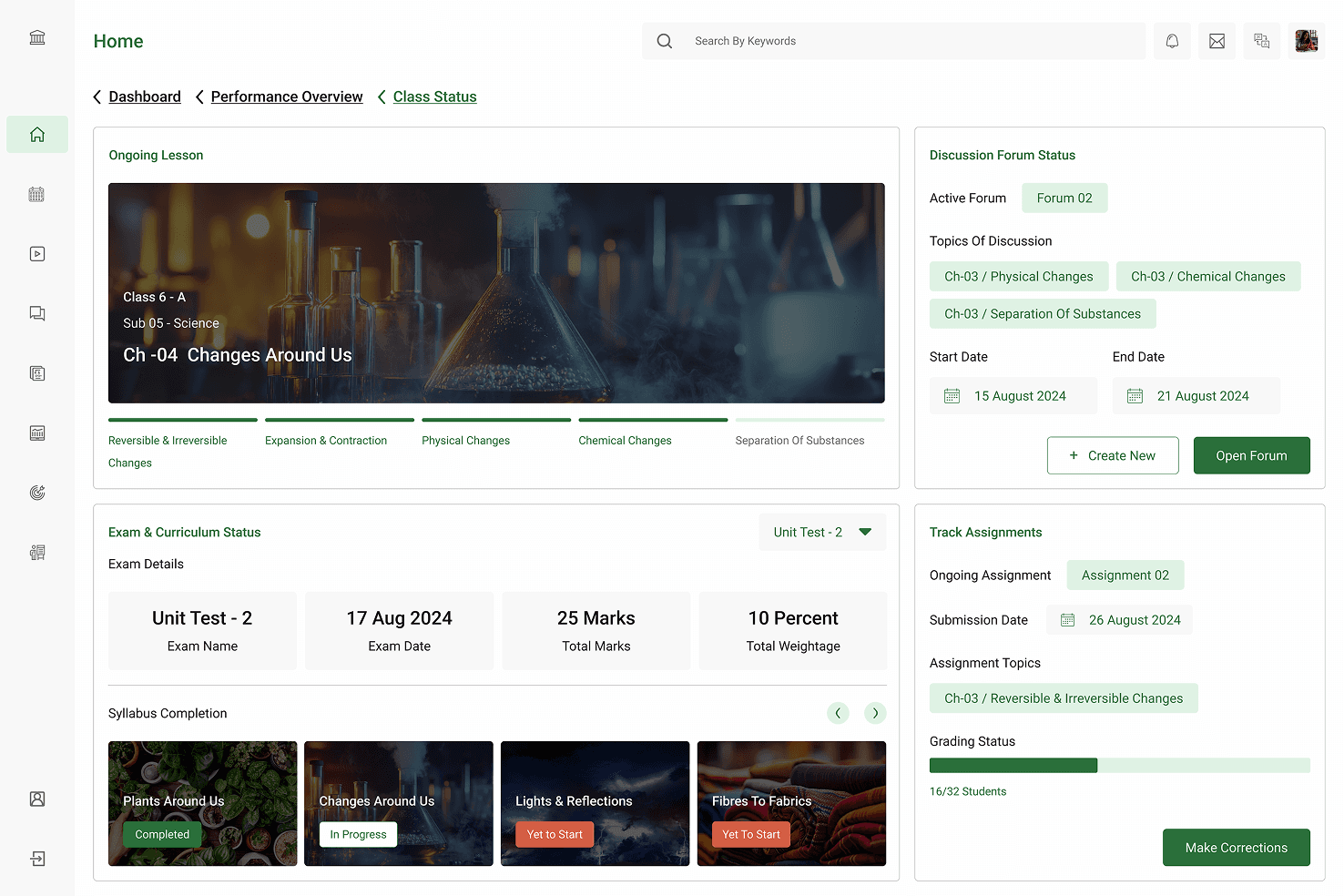
Syllabus Progress Tracker
Provides a real-time syllabus tracker with alerts to help teachers stay on pace for exams.
Ongoing Lesson

Reversible & Irreversible
Expansion & Contraction
Physical Changes
Chemical Changes
Separation Of Substances
Discussion Form Status
15 - 21 Aug 2024
Topics Of Discussion
Ch-03 / Physical Changes
Ch-03 / Separation Of Substances
Ch-03 / Chemical Changes
Track Assignments
Assignment Topics
Ch-03 / Irreversible & Reversible Changes
Grading Status
16/32 Students
Designing IVRS Flows
Why It Matters
Ensures continuous learning despite network or device limitations.
Supports local languages and emotional engagement for inclusivity.
Strengthens the home-school connection by keeping parents involved.
How It Transforms learning experience
Provides 24/7 learning access via any phone.
Enables two-way interaction for tasks and feedback.
Cost-effective and scalable, reaching more students efficiently.
Dial to Connect
User calls the toll-free number to connect.

Receive Task Details via SMS
When you select Tasks, an SMS is sent with the scheduled task shared by the teacher.
Today
8:30 am
Scheduled Task ( Sub 04 / Science )
Observe and record daily water usage at home for three days under drinking, bathing, washing, cleaning, and gardening. Reflect on two ways you can reduce water use and bring a small change at home.
Choose Your Subject
Press a number between 1 and 6 to select the subject you want to explore.

01
Kannada

02
English

03
Hindi

04
Mathematics

05
Science

06
Social Science
Start Quiz through messaging
Press # to begin the quiz. Questions arrive via SMS, and you reply to each one in order.
Edu Grad Quiz 2
1min ago
Lorem ipsum dolor sit amet, consectetur adipiscing elit. Morbi eu lorem augue. Proin
Navigate Sections & Sub-Options
On Selecting the subject of your choice. Press 1 for Tasks, 2 for Quizzes, or 3 for Results.
01
For Tasks
02
For Quizzes
03
For Results
View Results & Mentions
Dial back and press 3 to hear your quiz results and check if you got any special mentions.

Lakshmi Menon

Ramaswamy Muthu

Vipul Das
Potential areas of impact

1. Rural Underserved Schools

2. Homeschooling
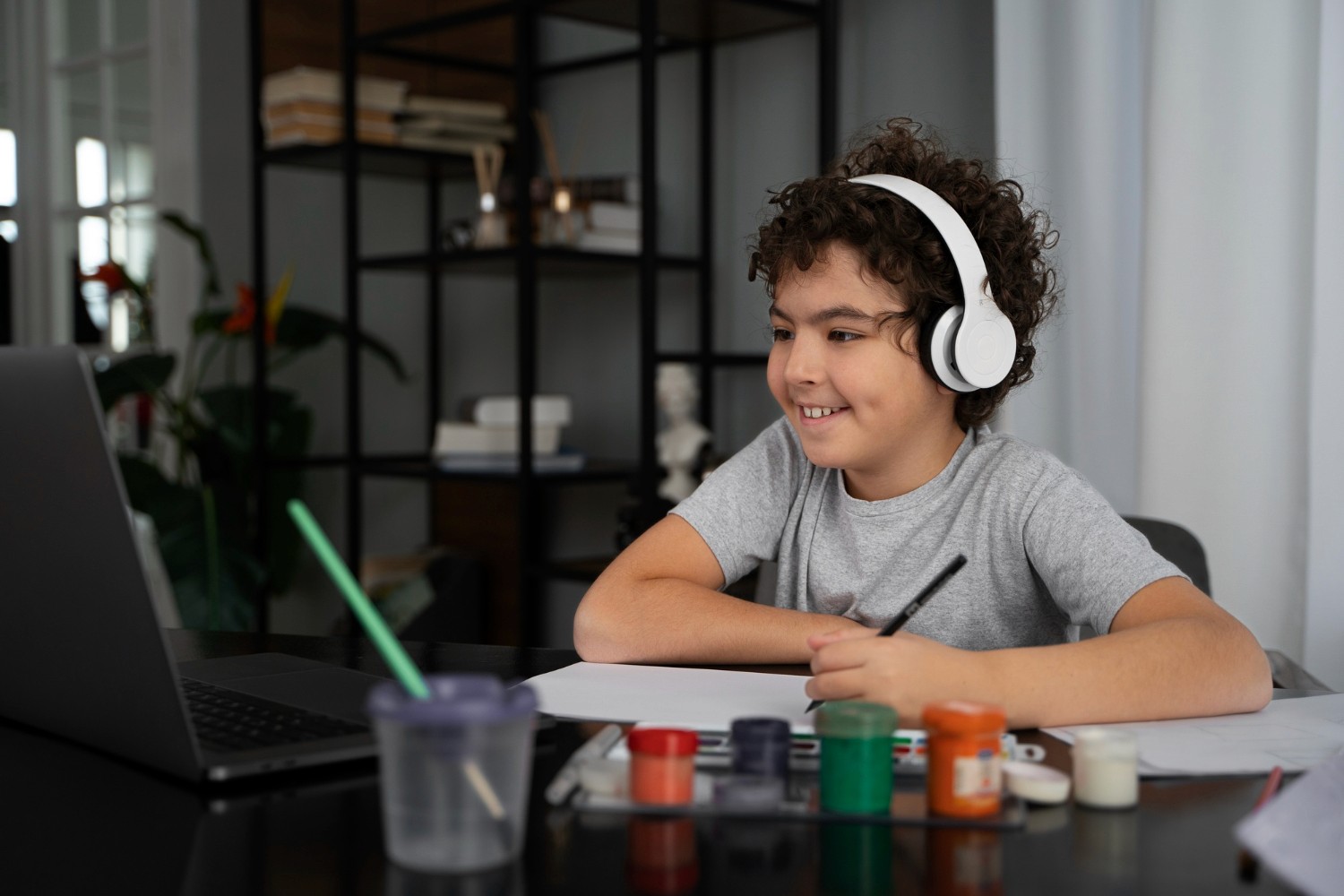
3. Online Tutoring
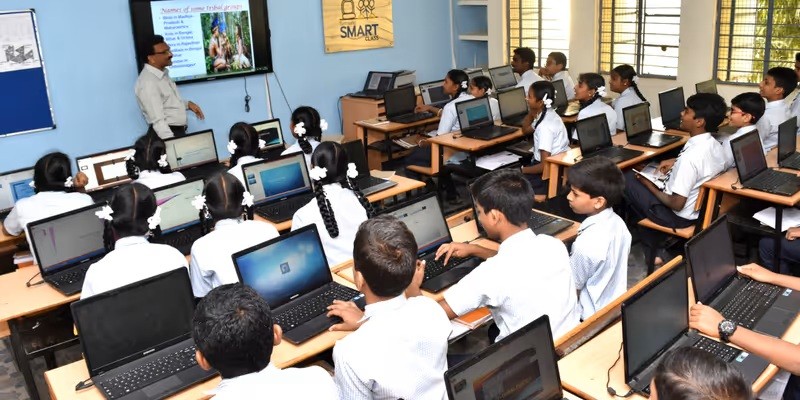
4. Private E-Smart Schools

5. Distance Learning

6. Corporate Learning & Upskilling
Key Learnings

Always Listen to the Real Users
Talking to rural teachers and students showed me that user needs often differ from our assumptions. Even basics like language or attendance tracking made a big difference. I’ve learned the importance of stepping into users’ shoes early on.
Keep It Simple and Contextual
I learned that the best solutions don’t need to be fancy—they need to work in the user’s environment. Designing offline features, simple dashboards, or adding a timetable view helped me solve real problems without overcomplicating things.
Iterate with Feedback, Not in Isolation
By testing and refining ideas based on what teachers said (like wanting to highlight good student questions or change grades), I saw how small tweaks from feedback can improve the entire experience. Design is never done in one go.
Dive into the Details
Dive into the Details
To explore the full case study and dive into the complete design process, feel free to connect with me.
To explore the full case study and dive into the complete design process, please open the link in desktop mode. For more details, feel free to connect with me.
To explore the full case study and dive into the complete design process, please open the link in desktop mode. For more details, feel free to connect with me.
Connect with me
Thank You